Episode Transcript
[00:00:00] Speaker A: Hey, everyone, this is Tom Salome of Device Talks. Welcome back to Device Talks weekly podcast. Great to have you here. We've got a bit of this and a bit of that. We've got a bit of Device Talks Boston, which happened a week ago. Bit of Device Talks Minnesota, which happened a month ago.
Chris and I will open up with the Newmarkers newsmakers later on. I'll speak with Lisa Earnhardt of Abbott. She was our closing keynote at Device Talks Minnesota. This entire episode is made possible by our good friends at ATL Medical. Thank you to them for sponsoring. Kayleen Brown, our amazing managing editor, will sit down with CEO Jim Fitzgerald. You'll hear that immediately after the Newmarkers newsmakers. So I hope you enjoy this conversation. Really great to be back on our regular schedule, not in conference planning, heck, but it was a fantastic time seeing everybody at Device Talks Boston and of course, earlier, Device Talks Minnesota. Thank you all for being part of Device Talks. Before we begin the podcast, though, I'd like to invite you to be part of our Neurotech webinar series next week.
It'll happen on Tuesday, June 9, Wednesday, June 10, Thursday, June 11, noon Eastern, every single time. And we'll start off with a conversation that I'll have with the fine folks at Phantom Neuro. I'll speak with Vinod Sharma. He's the head of clinical and scientific affairs at Phantom Neuro, and they have an amazing tech that connects the brain to robotic prosthetic limbs. On Wednesday, I get to sit down with podcast fave Deanna Harshberger. She's the CEO of Kayla Health. Uh, we'll talk about how they're pioneering non invasive, wearable bioelectronic medicine for essential tremor and Parkinson's. And then on Thursday, I sit down with Oliver Amitaj. He's the Chief Clinical and Data Officer at Axoft. We had CEO Paul LaFlach on the podcast just a couple of weeks ago. Uh, this is more from Axoff. We'll get more into their technology, more into Fluoron, and understand their approach in Neuro. So all of this was brought to you by the fine folks at Confluent. Make sure you go to device talks.com to register for that. It's free. You can watch live or you can watch on demand if you want to get your questions. Though if you want to get your questions answered, you'll need to watch live, so. All right, well, that's it, folks. Let's get into this episode of the Device Talks weekly podcast.
All right, you ready for this?
[00:02:21] Speaker B: Ready.
[00:02:41] Speaker A: Chris Newmarker. How are you, sir?
[00:02:43] Speaker B: Hey. Doing well, Tom. Doing well. Hey, feeling the glow from last week. It was a good, good show.
[00:02:49] Speaker A: It was a great show. Yeah. I'm not sure if I'm glowing. I'm kind of dragging, but definitely was wonderful to see everybody in the great city of Boston. Good to hang out with you folks. We had a couple of nice dinners with some of our friends, some of our sponsor friends, and then just us, the team. It really was nice to see folks, for folks who don't know, we're a remote operation so we don't get together. In fact, that was the first time ever that we were all in one single place.
[00:03:20] Speaker B: Yeah. At least the people on this current team. It's been that many years.
[00:03:24] Speaker A: So did you have a designated Survivor? If, you know, if something happened to the bcc, who would take over Mass
[00:03:31] Speaker B: Device, you know, that would have been a problem, Tom. That would have been an interesting challenge. I mean,
[00:03:40] Speaker A: you didn't give that any thought, did you? Good calling. Who's going to take over a Mass device if we're all wiped out in a catastrophic asteroid landing atop.
[00:03:48] Speaker B: I'm like, I'm like Prince. Not having a. Well, like, you know, you just don't you figure it out.
[00:03:55] Speaker A: Sure the company would have rolled on. I'm sure they would have sorted it.
[00:03:58] Speaker B: Yeah, I'm sure they would eventually. You know, it would have been the same magic, Tom. It wouldn't have been the same magic.
Take a long time to get back to.
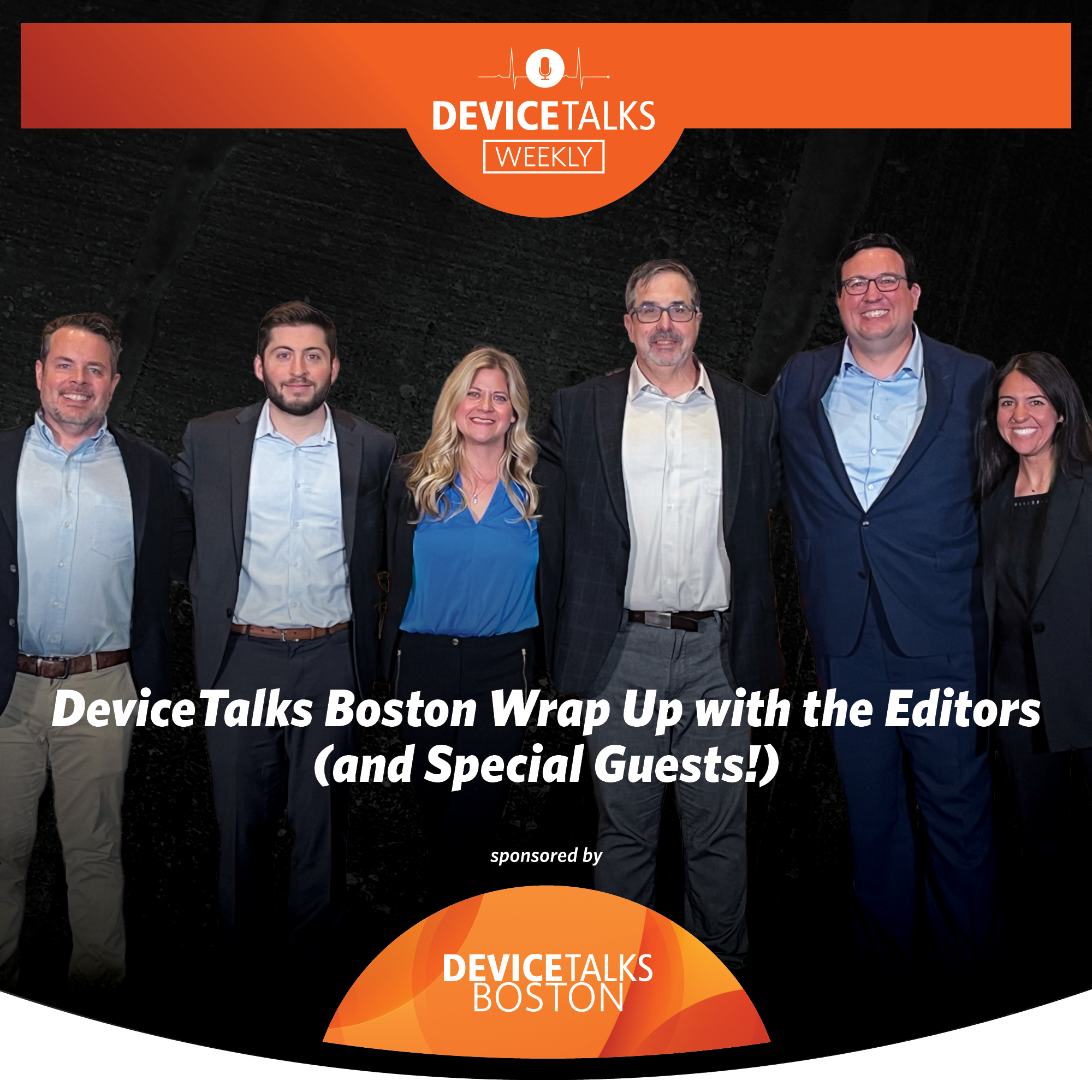
[00:04:07] Speaker A: But we had our folks who listened to the podcast last week could they would have seen the nice image of the five of us together.
Five of us together. Six of us together. Can't do math.
And it was great. It was great to see everybody. Great to see our speakers. We had a lot of great conversations on stage and off.
So thanks to everyone who came out and made a part of their May. But now we're in June.
[00:04:30] Speaker C: Chris Newmarker.
[00:04:31] Speaker B: Now we're in June, man. Time's flown by.
[00:04:33] Speaker A: So, Chris Newmacher, in our episode last week, we celebrated a milestone birthday for our own Kayleen Brown of Human Device Talks. And you have a biggie coming yourself, right?
[00:04:46] Speaker B: Yeah, yeah. I'm heading the big five.
[00:04:48] Speaker C: Zero.
[00:04:48] Speaker B: I can't believe it.
Exactly. I always. I always know exactly how old America is because, you know, I was born on the bicentennial.
[00:04:56] Speaker A: So you're born on the bicentennial. You missed a good time. I'll let you know that. I was, you know, five or six. We were rocking the Tallest ships in Boston. It was a party.
No UFC fights, but, but still we managed to have a good time.
[00:05:11] Speaker B: No, no pro wrestling in the White House law.
[00:05:16] Speaker A: No, there was none of that.
[00:05:18] Speaker B: No strange architecture going up in the city here.
[00:05:22] Speaker A: No portion of the White House was torn down as a result.
I could go down a few weird, weird tangents, but I think we probably should have trolled the newsmakers.
[00:05:31] Speaker B: Yeah, we should probably.
[00:05:32] Speaker A: Chris Newmarker thank you, Tom. Thank you to you. I won't go there.
I know we sang to Kayleen Brown,
[00:05:40] Speaker B: but please, no over the hill cards. And I will be taking stuff some, a bit of time off here. So we'll be doing a, doing a little bit of a, a guest host rotation in here for the news makers this month. So that'll be fun. It's going to be like a late night talk show. So we'll, you know, we'll see how, you know, Jim, Jim Skyler and Sean do for the rest of the month. It'll be, it'll be fun.
[00:06:02] Speaker A: D is nifty, my friend. You're going to have a good time.
All right, well, what is number five on the award winning, much ballyhooed Newmarkers Newsmakers?
[00:06:12] Speaker B: Well, number five on the list we've, this is from yours truly.
Got a, an embargoed pitch about Philips having a partnership with Disney and you know, especially being the father of little kids, I was like, I mean, yeah, I got to write about that. I mean, but it's actually, it's, it's really cool.
It's, you know, like Philips for years has had this kind of like ambient experience for mri.
If you've ever had to have an mri, it definitely is quite the experience. I mean, getting shoved into a tube, you know, while they run very loud scans on you.
Having something with like music and soothing lights and nice images, sounds great. I mean, that's especially helpful with children. I mean, I can't even imagine a child going through an MRI experience or being a parent, you know, with a child who needs an mri.
Just really, really neat. That Disney has free of charge is allowing Philips to use Disney characters like a whole host of characters from the Disney universe and kind of like this ambient experience programming that they have on their MRI machines. And you know, they're rolling this out at medical facilities in 87 countries around the world.
So if you have a kid who needs to get an mri, if it's a Phillips machine, they at least could get some company. Now going forward with Mickey and Minnie Mouse or Star wars favorites and much more so it was actually neat too.
I interviewed Philip's Chief Medical Officer, Dr. Atul Gupta, their chief medical officer for their diagnosis and treatment business.
He really kind of like went through with me, like, kind of like the whole experience they're trying to like construct around mri, you know, for children and how, you know, kind of like one of their biggest things is trying to design it in a way that children don't entirely feel powerless when they have to go through an MRI experience.
You know, I have a lot from that interview on medical design and outsourcing in an accompanying article, but yeah, just really fascinating stuff.
[00:08:35] Speaker A: That's great.
Certainly it's a stressful time for the kids and for the parents. So anything that can be done to make it a little more fun and help the time pass? For sure. I remember a few times we've unfortunately had to take a little one to the ER.
The YouTube Fire Trucks channel was always a great distractor. It was just like 50 minutes of fire trucks leaving fire stations and that did the job.
[00:09:00] Speaker B: That can do it.
[00:09:01] Speaker A: But this feels a little bit better.
[00:09:03] Speaker B: Yeah.
[00:09:04] Speaker A: Your lead, you said, integrating Mickey Mouse, Yoda and many more Disney stories and characters. Was it Yoda or was it. You think it's Baby Yoda? Is it a Grogu situation or you think it's.
[00:09:14] Speaker B: I hope, I hope Grogu's on the list.
[00:09:17] Speaker A: Gotta go Grogu, I would think.
[00:09:19] Speaker B: Gotta have Grogu.
[00:09:20] Speaker A: Come on, who doesn't love a good Grogu?
[00:09:24] Speaker B: I'm noticing some videos, I even on the MDO story embedded a video of one example of how this stuff looks inside an mri.
But yeah, I hope they have Grogu in there. We gotta do that.
[00:09:38] Speaker A: All right, Chris Newmark, what's number four?
[00:09:41] Speaker B: Hey, number four on the list. We've got Neurovalenz, earning an FDA nod for their Modius Sparrow, which is a neuromodulation platform to treat ptsd. So really, really interesting.
[00:09:57] Speaker A: And it looks like it's a non invasive device that you put on your head and it has these two little receptors or almost like earbuds that go behind your ear.
And it looks like it emits a little bit of electrical pulse that delivered to the skin behind the ear.
[00:10:17] Speaker B: Yeah, I mean, it's 30 minutes a
[00:10:19] Speaker A: day while patients can perform other activities like watching tv, reading or during therapy. It looks. This is all written by Sean Hooley, senior editor of Matt Device.
[00:10:30] Speaker B: Yeah. And yeah, I'm just, I just think it's amazing how we're just seeing the proliferation of all these, you know, type of kind of, you know, pretty minimally invasive, not even non invasive, you know, neuro, neuromodulation systems that you know, can treat a whole variety of conditions. And I mean that sounds great. I mean the less pharmaceuticals people need to use, the better I think. So you know, this is, this is just really great to see more devices like this coming out and I know that, I mean the company's based in Belfast, but the, I guess Sean was mentioning me, the CEO is kind of around Boston right now. So you know Sean, we're talking on a Wednesday and you know, Sean's actually grabbing a coffee today with their CEO. So. Yeah, so getting, doing a little networking around the Boston community. I like to get my coffees in around the Minneapolis community. So, you know, good deal.
[00:11:30] Speaker A: We had obviously Christian Howell, CEO of Cognito Therapeutics on the podcast two times a few weeks ago. But he was also, I had the chance to sit down with him for about an hour at Device Talks Boston and talk about their system which of course is audible and visually delivered energy that generates gamma waves in the brain as a ways, as a way of slowing if not treating dementia also.
[00:11:54] Speaker B: Wow.
[00:11:55] Speaker A: So and was presented that this is a whole new class of medical devices. Just, just the, these, these non invasive sort of energy based human we were talking specifically about delivered through visual cortex and through, through the auditory system.
But it's really amazing that companies like these and technology like the, like these could do some good without, without requiring any sort of procedures or any sort of invasive intervention or, or, or procedures. So words aren't coming out of mouth. I'm still recovering from twice dogs Boston, but exciting stuff for sure. All right, Chris Newmarker, what's number three on the Newmarkers newsmakers?
[00:12:36] Speaker B: All right, number three on the list, Edwards, Edwards Life Sciences. They got a FDA nod for their Triformis Resilia surgical tricuspid valve replacement.
You know, Edwards is like, you know, saying this like as a significant approval because it's like they're saying it's the first surgical tricuspid valve that's designed specifically for patients with tricuspid valve disease. So you know, really neat to see a first like this out of Edwards.
[00:13:05] Speaker A: Absolutely. And a big news for, I mean gives Edwards sort of the surgical complement to its transcatheter valve. And really as it's been said, the tricuspid valve is sort of the forgotten valve. It's one that's been difficult to treat in the past. But Edwards and others now have this great portfolio of Valves that can help those folks, even those with kind of weird anatomies that don't allow for transcatheter delivery, so.
[00:13:33] Speaker B: Exactly.
[00:13:34] Speaker A: Great news for Edwards and for folks in the heart space. And going back, I know we talked about it on the podcast last week, but I love Devi Govinder's point about moving away from the term heart failure and moving toward heart recovery. I think that's a better way to put it. Yes, you're treating the heart failure, but it's one word, but I think it kind of just changes the energy of the space. So great to see. I know this is a different space than Abiomed, but still, I love these devices that are giving hope to people with very, very, very serious diseases. So good news for Edwards.
[00:14:14] Speaker B: Absolutely.
[00:14:16] Speaker A: All right, what's number two? Chris Newmarker.
[00:14:18] Speaker B: Hey, number two on the list.
You know, there was news out last week that, that the, you know, that, you know, they've, you know, like a major recall over at Insulin with the Omnipod 5 dash arrows pods. It's involving like 7 million pods involved in the recall. So, you know, just, you know, at this point, like they say 60% have been consumed or expired.
But you know, the, yeah, just a major recall over there with, you know, with Insulet, you know, saying that some of these affected pods may have a small tear in the tubing just above the skin.
And so at least as you know, they're saying they've identified the cause of the manufacturer issue and they've got some corrective actions in place to prevent this from reoccurring again.
Yeah, just it's always tough when we see a major recall like this in the industry.
I know Insulet overall, they definitely seem to be getting a lot of positive news out of them as well. I mean, just like talking today on Wednesday, they had like, they're saying they were rolling out new algorithm assessment enhancements for Omnipod 5, expanding compatibility with Avid. So there's definitely good news out of the company as well.
[00:15:48] Speaker A: Yeah, we had Eric Benjamin, COO of insulated Vice talks Boston last week. I asked him about this. I don't think he said anything really news making, but clearly insulates, you know, engage with their customers, engage with their potter community working towards solutions. And as you mentioned on the podcast last week, he's having interactions with people who are potters and it's really, you know, sorts of events are unfortunate.
I don't know if they're entirely unavoidable as devices get more complex and more complete in Treatment, but insulin is obviously taking this as serious as they should and making sure that they, they maintain the trust that they've built with the, the Potter and the, and the community of people who have diabetes.
[00:16:37] Speaker B: Yeah, absolutely.
[00:16:39] Speaker A: Yeah. So, all right, well, let's, let's roll onto number one, Chris Nebuchar.
[00:16:43] Speaker B: Well, hey, number one on the list.
[00:16:45] Speaker A: You know, fresh news, right? Just off the wires, fresh news.
[00:16:48] Speaker B: Yep. I was, you know, I, I, I was up early this morning covering Medtronic earnings and go a pretty positive report out of Medtronic, you know, and the, the markets are responding positively as well. Their stocks up more than 5% today after they saw Q4 revenue. They grew 9.9%. They almost got to double digits for, for the fourth quarter. I mean, they say this was their best revenue growth in 10 years. I mean, okay, they, their, their, their earnings just, just met the street. But, but yeah, just to have that strong of revenue growth. And they've just got a lot of things just kind of driving growth over there now, which is just really great news. It's great to see like the largest medtech out there, really kind of, Gosh, can I say they're getting some mojo back. I kind of feel like they got some mojo going on here. They got some stuff that's exciting.
[00:17:48] Speaker A: Yeah. I mean, obviously the approval of Hugo. They had some key acquisitions this year. They're going to drive this fiscal year or the past six months or so that they're going to drive growth for, for the next year. So it seems to be like, seems to, it seems to me that they're on a higher growth trajectory.
You know, obviously good, good news in the cardiac ablation space.
[00:18:10] Speaker B: They're grabbing some share.
Cardiac ablation, including, like their U.S.
business, more than doubled quarter, quarter over quarter. I mean, that, I mean, I, I, I noticed that in Q3 as well, but, you know, that's really, you know, that's really good news. They're, they're pulling on about 100 million a year now off of renal denervation. So that's a start. You know, so that, that could, you know, they've always said that could get a lot, a lot larger for them. And you know, they got some other, they're saying they're more focused now that they spun out the diabetes business.
There's the Ultaviva, like tibial neuromod to treat urinary incontinence. That seems to be like, really, you know, catching some, some attention. And, and they've got a new, you know, spinal surgery system. Out there as well. So, I mean, just. Just a lot of. A lot of stuff going on over there. And, you know, the analysts seem, you know, pretty positive about this as well.
[00:19:06] Speaker A: And do they have any more news as to new investments or things they're doing to build for, for us this coming fiscal year?
[00:19:13] Speaker B: Oh, yeah. I mean, they actually now announced a round of investments and a number of, like, early commercial stage companies, you know, that they. Where they see potential to.
To, you know, to expand their cardiac ablation portfolio even, even more so. I mean, they're seeing a lot of effect in cardiac ablation and they're, you know, making some investments in young companies that they think could, you know, boost them even more in the space in the future. So, I mean, that's really exciting. And they also had news today that they filed for some extra clearances for Hugo in the United States.
It was a newsy report as well. It wasn't just like, hey, our revenue grew so much.
[00:20:00] Speaker A: That's great. Yeah. One of the companies I'm looking at the release now is Cardio acc. I guess that's how you say it in early commercial stage. Company based in Shenzhen, China, cardio ACC received National Medical Products Administration approval for its ICE system in 2025. Intracardiac echocardiography catheter technology system. So very cool. All right, well, yeah, I guess we're seeing some mo and some Joe. Chris Newmarker. Mojo for sure.
[00:20:27] Speaker B: Totally.
[00:20:28] Speaker A: Go Medtronic. All right, well, Chris Newmarker, you have a great time celebrating yourself. Happy 50th.
[00:20:36] Speaker B: Thank you, Tom. Thank you.
[00:20:38] Speaker A: I'll spare you the happy birthday song, but know that I'm thinking of you as you age even faster going forward. 50 is nifty.
[00:20:49] Speaker B: 50 is great.
I'm like a fine wine, Tom. I'm like fine wine.
I'm like a good bottle of port.
[00:20:56] Speaker A: Need a cork? Is that what you say?
Bad dad jokes?
[00:21:02] Speaker B: I probably do need a cork.
[00:21:07] Speaker A: All right, Chris Newmarker, great job as always.
[00:21:09] Speaker B: Hey, take care, man.
[00:21:10] Speaker A: Now it's time to hear from our friends at ATL Medical. Once again. Managing editor Kayleen Brown sits down with CEO Jim Fitzgerald.
[00:21:20] Speaker D: Jim Fitzgerald, CEO for ATL Medical. Welcome to the podcast.
[00:21:25] Speaker C: Thank you. Glad to be here.
[00:21:27] Speaker D: So, Jim, I have been so keen to get you on the other side of the camera for a lot of reasons. One, I want to get to know ATL Medical more. But second, you have such a great background in medtech, so let's start there. How did you find your way into medtech? And then from there, how did you find your way to ATL Medical?
[00:21:44] Speaker C: Yeah, Kayleen, it's actually been a really fun journey. I started my career actually working directly with the acute care hospital market. Spent about the first half of my career doing that. So a lot of time actually in the hospital working with hospital administrators and clinicians. And then I had a chance to make a pivot, a career move to move over to contract manufacturing, which is really where I've spent the second half of my career. And the exciting part about that is it's allowed me to learn a little bit more about the manufacturing side and the product development side. And that's really what brought me to ATL and the interest that I had in joining an organization that was really well known for being a full medical device contract manufacturer and supporting some of that exciting product innovation that's occurring today.
[00:22:26] Speaker D: Well, I don't want to wait any longer. So tell me more about this exciting innovation. Tell us about ATL Medical.
[00:22:33] Speaker C: Yeah, so we have a strength as a business partner in providing outsourced manufacturing services for some of the leading OEMs globally. And what we provide are really gives the support from a technical standpoint on front end product development all the way through developing the manufacturing services, supporting the regulatory filing, and then being a reliable, steady state manufacturing partner for them. We operate globally, so that also adds value for us and our customers. We've got a couple sites in the United States and then three outside of the us Each of which serves in a slightly different way to help support our value proposition, which is ultimately to deliver the best product that we can for our customers and their efforts to take care of their patients.
[00:23:16] Speaker D: It's very clear that ATL Medical has this deep technical expertise. With that in mind, how does Atlanta Medical work with medical device companies?
[00:23:26] Speaker C: Yeah, I think there's two parts to that question, Kayleen. The first is upfront. We like to partner early with our customers, help them from the beginning phase of product development, concept development, really support those design and development services.
But what I think makes us unique is that the biggest part of the formula for success is building trust. Because it's a one to one relationship.
98% of what we manufacture, we're the sole source partner for that means we're getting 100% of our customers demand.
Ultimately, what it really means is that our success is solely dependent on their success.
And so operating in that environment where each party knows how important the other party is to them as a custom contract manufacturer, in a sole source environment for devices that are highly regulated, I think makes this Business model extremely unique and very much dependent on high levels of trust and transparency.
[00:24:21] Speaker D: Jim, there's so much that I want to unpack here. I love the concept of trust and dependability.
I'm going to dig into that a little further, but I want to get a better understanding of the more granular level of ATO medical. What type of devices do you design and manufacture?
[00:24:39] Speaker C: Yeah, our area of strength is really around medical contract design and manufacturing that specializes in advanced energy devices or sensor enabled complex catheter devices.
Think of scopes and camera based devices, or maybe even disposable or capital equipment. But all of which is relying on an energy source to help that device function. At a high level.
Areas that you'd be familiar with would include cardiovascular or electrophysiology, electrosurgical. Those are some of the areas where I think the predominance of the medical devices are relying heavily on a really reliable energy source to help them function.
[00:25:19] Speaker D: I want to circle back to that trust and dependability. Is there a mission or a purpose that drives ATL medical success?
[00:25:27] Speaker C: Yeah, I mean, like most companies, we have a mission statement and it inspires us for the work that we do. But I think you can find the best example of our mission and our tagline, which is manufacturing for life. It's really the rallying cry for our organization and it's acknowledgement that when we sign up to be a business partner with a customer, we sign up to do it for them for life. In this case, it's both the product life, so the life cycle of the device that we're going to help develop and produce for them, but it's also the life of the patient that's going to benefit from that product. And so it really ties it all together for us in a really meaningful way. Aligning us with our customer, aligning us with their customer, and ultimately really motivating our organization to do the work that we do at a very high level.
[00:26:13] Speaker D: I love all of that and I could just see the authenticity from you as you communicate that. Do you happen to have a story to illustrate this trust in how you work with medical device companies?
[00:26:26] Speaker C: Yeah, we do have a number of them. One of them that I think we're pretty proud of and something that you can find on our website describes a scenario where a customer approached us with a problem that they were having with another manufacturer that was working for them. And ultimately that's when we're at our best, when somebody's got a problem to solve or they're looking for some input and Transparency. In this particular case, what they really needed was both a design change and a manufacturing process change to help them with this visualization solution that they were trying to create to market. And by partnering with them and continuing to operate in that spirit of transparency and aligned incentives, we were able to solve that problem for them, help them get a successful product to market and ultimately deliver higher level of clinical outcomes towards patient care. But it motivates us every day. So lots of case studies, I think they're always a great way to showcase what we do.
[00:27:15] Speaker D: Well, Jim, I want to keep you forever, but last question for you. When you think about the future, what capabilities and advancements are you most excited about?
[00:27:24] Speaker C: Yeah, probably the one that I'm excited the most and I think innovation in this medtech space throughout my entire career has been fun to watch. We can see where the impact of miniaturization and advanced therapeutic applications through energy solutions are continuing to drive better patient outcomes.
There's a lot happening in the pulsed field ablation space today. We're an active participant in those medical devices. It's something that really is especially important to me as I had a dad who benefited from one of those procedures not too long ago. And as I'm sure many of our listeners have seen as well, it's just a therapeutic application that is quickly transforming effective patient care. So that theme in particular really leverages the idea of how can we do more? How can we do it in a less evasive way? How can we have devices that are more enabled and that fits right into ATL sweet spot? So, yeah, super excited about what we're seeing evolve in the space and equally as excited about ATL's ability to help our customers find new ways to be successful as we go forward.
[00:28:26] Speaker D: Well, Jim Fitzgerald, CEO for ATL Medical, thank you so much for joining me on the podcast.
[00:28:31] Speaker C: Thanks, Kayleen. It's been my pleasure. Appreciate your support to our audience.
[00:28:36] Speaker D: I know that you're keen to better understand why ATL Medical's tagline is manufacturing for life. So to get an answer to that, please visit their website at www.atlmedical.com. i have dropped in the link to the blog series so you can learn more. Once again, thank you so much to our sponsor, ATL Medical, and you can learn more about them at www.atlmedical.com.
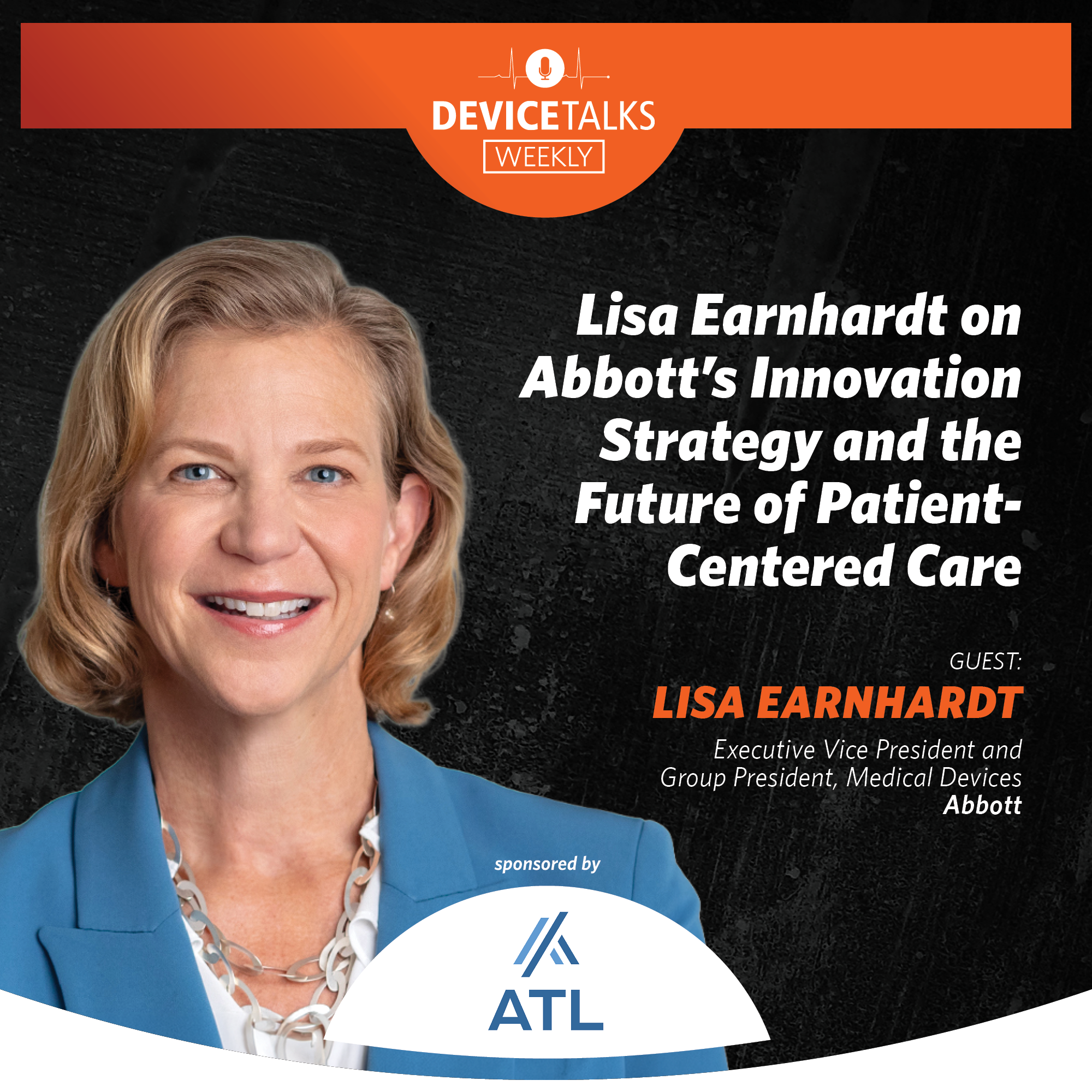
[00:29:05] Speaker A: all right, thank you to ATL Medical for sponsoring this episode of the Device Talks weekly podcast. Thanks, of course, to Jim Fitzgerald for being a guest on the podcast. Now it's time for our keynote conversation I had the pleasure of speaking with Lisa Earnhardt. She, of course, is the head of Abbott's medical device business. I've known Lisa for a long time when she was just starting out as the CEO of a little startup called Intersect ent.
Been a longtime admirer, but have not had the chance to have a sit down with her on stage. So it was a lot of fun. She was our closing keynote at Device Talks, Minnesota. She was there for most of the day, and I know she was really engaged with the med tech community, so I'm really grateful for that. If you're one of the lucky many who are there, I hope you had a chance to speak with Lisa. But now we'll play this conversation. We'll talk about why she took the job, Abbott's astronomical growth, and how it's moving MedTech into the future. Let's listen.
We're two minutes early, but you're all here. We're here.
Let's get rolling. So I've got a great conversation. Really pleased to be joined by Lisa Earnhardt. She's executive vice president and group president of medical devices at Abbott and had the pleasure of knowing Lisa for a long time.
I think I first wrote about you when you were with Intersect ent. So we're going to explore your backstory and of course, get a look at the future of where Abbott's going to take us or help take us. So thank you for joining us.
[00:30:33] Speaker E: All right. I am so happy to be here. Before we dive in, I just want to say a couple of weeks ago you posted like home is where the heart is in the context I think of this, this conference. And just by way of background, I was actually born and spent my first five formative years in Mankato, Minnesota.
So I am a Minnesotans tr.
[00:30:56] Speaker B: True.
[00:30:57] Speaker E: And then hearing Manny talk, it just brings great memories back to me because I started my career almost 30 years ago in medical devices working for a small little company called cpi.
And so I've got this strong connection to Manny years ago, and now I just happen to run Abbott Medical Devices, and a good portion of that is St. Jude Medical.
And so it's really pretty fitting that I'm sitting here defollowing the great Manny Villafano. It's a tough, tough act to follow, but I'll do my best.
[00:31:34] Speaker A: Well, this is actually. This is your life, Lisa Earnhardt.
[00:31:37] Speaker E: This is my life.
[00:31:39] Speaker A: Just to get you here.
And you fell for it. No. That's great.
And the post about this being the heart of MedTech, as I said at the Start. Chris and I like to joke about which is a better medtech community. And I'm from Boston, so I'm obnoxious about it. And he's from Minnesota, so he's nice about it. But we both have solid arguments.
Yeah.
[00:32:00] Speaker E: And Minnesota is core to who we are as a.
[00:32:02] Speaker A: It is core.
[00:32:02] Speaker E: We've got thousands of employees here doing amazing work. So I'm happy to. And proud to be representing them today.
[00:32:09] Speaker A: And you should be, so. All right, well, so let's talk about your early career. You found success at Guidance and you got in. People are just.
All you do is say positive things about Guidance. I can never get you to badmouth the experience, so I won't even try.
But you went from guided, joined Boston Scientific through the acquisition. But then in 2008, startup called you, and I'd like to explore the decision for you to leave those large companies and lead Intersect ent, because you were in a position where you'd gone through the merger. You were leading a business at a company that ultimately would find its way, and that potential was certainly there.
But I would love to sort of unpack.
What were the questions you asked yourself and answered that led you to taking on a risky venture like a startup?
[00:32:59] Speaker E: Yeah. So to your point, I did go to Boston Scientific as part of the Guidant acquisition. I was running the cardiac surgery business at the time, and it was less that I was leaving Boston Scientific, it was more that I was going into the startup world and going to run Intersect ent.
So you all know, and many of you do represent the innovation ecosystem and the incredible startups that really fuel innovation in our industry.
And I was at a point in my career where if I stayed in the big corporate world, I would do the next big business unit president or group president role.
And I decided that so much of innovation happens in the startup world, I wanted to take my shot at it.
So as I thought about opportunities, I, you know, first off was looking for great teams and so. And hard to judge when you're, you know, very small and early on, but the thought was prioritizing the team because whatever problem would come our way, we would figure that out. So as I thought about the teams and I, when I say team, in this case, it was both the board as well as.
As well as the employees on board. I was employee number 14, so it wasn't like there were a lot of employees, but that core nucleus of talent was just extraordinary.
And then the board itself as well. So we had amazing venture capitalists who had long careers in Medical devices. Dana Mead, who I'd known at Guidant, and then Casey Tansey, who had a long career in medtech and has been an incredibly successful venture capitalist at US Venture Partners. We also had this young gentleman named Dr. Fred Mall around the table, if you don't know that name. He is the founder of Intuitive Surgical and since then subsequently, several other robotic companies. And so for me, first and foremost, as I was making the decision to go to Intersect, it was the team and then secondarily it was the opportunity. Right. And just big unmet need.
An area where I didn't know clinically and I didn't know that physician community. It was moving from cardiovascular into ear, nose and throat and specifically chronic sinusitis. But big lung met need and we had a phenomenal team with both the board and the employees. So I was in.
[00:35:23] Speaker A: That's great. So what lessons did you learn@intersect ENT both as a CEO and as a leader of an organization, but also as a market builder. You can get into maybe a little more into what the company sold, but it was a novel technology and at the time was a smaller medtech market.
[00:35:41] Speaker E: Yeah. And I think first and foremost it does come down to the team and just the importance of that.
You realize every single employee contributes a lot to the culture, especially when you're starting up a new venture. And so careful selection and management of the team is so important. And in fact, I actually interviewed everyone who joined the team up to employee 100.
And so I just felt that was so important when you think about their contribution, not just their work, but their contribution to the culture and making sure we were, you know, building a team that I thought could not just be successful for the task at hand, but also the future.
And then also I would say just in terms of learning, it's the real need to focus.
And one of the things that Casey Tansey used to say is like you sort of earn the right to do the next thing. And I had always been, you know, I'd spent 14 years in big med tech and we were fortunate. When we were launching new products or working on new programs, you could do a lot of things in parallel.
So you might be running a clinical trial and, or you're in submission with the regulatory agency. In parallel, you were actually planning for the launch. You might be building inventory at risk or starting launch preparation. And then you realize in the startup world you need to like really focus on that next value driving milestone. So it's very difficult and actually can be lethal to a company if you, you you invest too quickly because things change and things don't go as planned. So I think it's that real focus. We had a lot of different things we thought we could do and wanted to do in terms of different products, different indications. And when I started, the team had a lot of, of a lot of ideas and things, and it was just like, we need to do one thing. What is that main thing we're going to accomplish and we'll get that across the finish line. And that was the same thing even when we commercialized was just saying, hey, we need to prove this out, develop a recipe for success before we scale. So it's really that careful utilization of resources in a ruthless prioritization.
[00:37:51] Speaker A: I was going to ask, how difficult was that prioritization process? And did you deprioritize projects that, I don't know, maybe in retrospect you wish you had it now.
[00:38:02] Speaker E: You know, it's always hard with prioritization, and it's really hard when you're not just launching a new product, but also creating a new market.
And so there are a lot of things you need to do and have to do. And the question is, how do you do those at the right time, with the right level of investment? And so it's a bit of a Rubik's Cube just to date myself. It's, you know, there's not one way to get to the answer, but there usually is an answer that is, you know, the right course. And the. And the trick is, is when you make a decision just recognizing if it isn't the right one, you need to pivot. You need to pivot hard.
[00:38:40] Speaker A: And just to follow up on the point, you, you interviewed all the employees up to employee 100.
Was there a. Not a test for you, but was there some. A quality that you sought or looked for in your candidates that, that you felt was sort of the number one ingredient that a person needed to have, that they need to. Obviously they'll have the skillset, but was there something that was immeasurable that you could kind of pick up on that would make them successful at a startup?
[00:39:11] Speaker E: Gosh, there are a lot of things, I would say that curiosity, because you are solving hard problems every step of the way and just sort of being that open to learning and open to feedback and open to the fact that there are a lot of different ways solve problems and being curious and being okay and actually encouraging asking questions, because that's really what innovation is all about, is making sure you're asking the right questions. And in particular, Asking the right questions of your customers.
[00:39:40] Speaker C: Great point.
[00:39:41] Speaker A: So let's move to your move to Abbott. At the time you were finding success at Intersect D and T, the move to Abbott, obviously it was great news. I was a bit surprised that you. I saw you as a startup CEO, so when the news was announced, I was intrigued.
What did you find appealing about that? And did you draw on your experience that you'd had previously guided and then later Boston Scientific, and maybe you want to go back to something that you had experienced there?
[00:40:10] Speaker E: Yeah. So I think I took a lot of people by surprise, right, Because I was a public company CEO. I'd taken a company from the very early stages to going public, to being commercial. We were on that path towards profitability, all of those things. So we're having great success. And for me, it was just the. What's my next phase? So I did 14 years at Guidon and then. And then Boston Scientific, and I actually ended up doing 11 years at Intersect ENT, which I never would have imagined. Right. Usually go to a startup and quite honestly, usually it fails. Right. Or if you have a good outcome or a great outcome, it usually happens within, you know, five or seven years. And that usually is the company gets it's purchased. Right. And just along the way, we just kept playing it forward, Kept playing it forward. Had had options to exit earlier and said, we want to actually go public. So I had like eight different jobs, even though I was at Intersect along the way. So when Abbott called, my first response was like, oh, no, not interested. And the reason I said that is because, you know, big company, I'm like, I've done that, been there, done that. And then as I learn more, I recognize what a tremendous opportunity to make a.
We were and still are focused on some of the most costly, debilitating conditions like cardiovascular disease, chronic pain and movement disorders, diabetes, where technology innovation plays a significant role.
So I love the spaces that Abbott had decided to play in. It was also at a really interesting time because they had just acquired St. Jude Medical.
And so as I looked at the opportunity to really make a difference, I thought, wow, that's fantastic for me, because there was a lot of different products and a lot of different technologies at all different stages. Right. So there was quite a bit of work to be done in terms of getting our sort of our products and portfolios on the right track.
But I thought all the ingredients were there in terms of the basis of technology and most importantly, the team. And so as you think about what are some of the learnings there it was like phenomenal opportunity, but even more importantly, just a fantastic team, like very capable folks, both from the legacy Abbott as well as St. Jude Medical. It was just a matter of kind of pulling them all together because we were in the process of integrating, in the process of prioritization and then how do we actually rev up the innovation engines? And that was a big part of what I did the first couple of years at Abbott.
[00:42:44] Speaker A: So did you have to, it's too strong. Convince yourself or was there a self convincing that did you realize all the positives you just outlined in and came to the conclusion that this was the right move or was there a moment that you still sort of remember where you realize like, oh my gosh, like I absolutely need to do that. Was there a signal? A single moment, you know, for me
[00:43:04] Speaker E: was that I had never. So I'm a lifelong learner and I'm guessing many of the folks in this room are, we wouldn't do the work we did if we didn't like hard challenges that people don't know the answers to.
And for me, I've actually never let, let it scale before.
So I had led a business unit before. I had, you know, led a startup, the very early stages, taking it public, had never been a public CEO before, sat on board. You know, I'm just, I love putting myself in situations where it's new and challenging and boy was this new and challenging for me if I just think about leading at scale. So I have eight different business units across multiple disease states, 45,000 people around the globe, just completely different. And how do I instill an entrepreneurial spirit in a company that's been around almost 140 years? So for me it was just that challenge and a real conviction that we had the, you know, the right portfolio and we had the right people to really change the trajectory of my business. And that's exactly what the team has done.
[00:44:08] Speaker A: That's great. Now you've found some great success recently.
Just reviewing your portfolio. Diabetes care, heart failure, structural heart, electrophysiology, rhythm management, all reporting double digit percentage growth over the last fiscal year. Here we're talking with other medtechs or divesting and such to sort of get to where you are.
Is there a common thread?
These are all very different industries, but is there a common thread, sort of a secret ingredient to driving growth like that?
[00:44:38] Speaker E: First and foremost it's really understanding the customer needs and keeping the, you know, the patient at the physician at the core of all that we do.
And you see that across the portfolio you see that across our teams is listening, really listening to what is said. And sometimes it's actually what's not said is even more important. So I think that's a common thread that goes throughout all of our businesses.
And then it's really just the role of innovation and just really getting back to the basics. I really do believe there are a lot of ways to grow a business, but I think by developing breakthrough innovation is, is, you know, typically richly rewarded in our field. And that's exactly what you've seen in our portfolio, whether it be with Mitraclip or Freestyle Libre or more recently Volt or Aver, sort of across the portfolio. We can talk specifics about that, but we really have turned on the innovation. So we just. Last year was our third year of growing double digits as medical devices, which is a lot just given. As the numbers get bigger, it gets a little bit harder to do because I'm growing a couple billion a year. Right. And so, you know, that's birthing a, it's actually birthing like a new business unit every year kind of thing.
But you know, the good news is, is we, we have, you know, clear line of sight to be able to continue to grow sort of above, above market. And once again, the core of that is really driven by innovation.
[00:46:08] Speaker A: Let's unpack some of those businesses. We can zoom in first on diabetes care.
You talk about, I mean, you're bringing in a lot of new technologies. Consumable biowearables is impacting diabetes care. How does the inclusion of personal technology like that change the face of medical technology?
And do you see this as a sign of a broader image change in Medtech? Do you see more patient centric technologies sort of leading the way going forward?
[00:46:37] Speaker E: Yeah, I truly believe it is a transformative time in Medtech and at Abbott. It's, it's a key area of focus for us is really moving from a world of what really is sick care to something that really is healthcare. And you just think about our portfolio products.
It's oftentimes patients who have failed medical therapy, who are in the hospital, who need advanced therapies like a mitral valve replacement or a left ventricular assist device.
But you recognize that there's this huge opportunity to think about how do we intervene earlier in the disease progression and actually help patients kind of own their own healthcare and potentially even prevent disease. So you mentioned like pre diabetes. So with our Freestyle Libre device, it's for people with diabetes and it's a continuous glucose monitor. So instead of Pricking your finger, you know, eight, ten times a day to measure your sugar levels. It's actually measuring it, it every minute.
That ends up being, in some cases it can be linked up with an insulin pump or helps with patients make their insulin decisions, their nutrition decisions. Well, you can imagine doing something very similar for people who don't have diabetes, right? And one market, I think specifically pre diabetics. So there are over 100 million adults here in the US alone that have pre diabetes.
Over 80% don't know it.
And in fact, even if they do know it, they don't know how to manage it. So why don't we use continuous glucose monitors for those people and help them, you know, and train them and coach them. And so that's something we're doing is, and we can actually order that product off the market. I use it for health and wellness. I was pre diabetic during the, during the pandemic. And my first thought is like, I can't be pre diabetic. I run a diabetes business like get with the program Lisa. And it's been like life changing for me just in terms of understanding what foods impact my glucose levels. That directly impacts your energy levels. I used to, and some of you may have this afternoon slump and if I see you nodding off, just you be you but maybe make better nutrition choices tomorrow for lunch.
But you know, I used to always have that afternoon slump, right?
And it's amazing now, you know that if I, you know, if I eat my, you know, you know, greens first and then protein, I can have carbs at the end or I can have my, you know, 80, 80 plus percent dark chocolate and I'm perfectly fine and my glucose stays steady, my energy stays steady.
There's so much more benefit of that because actually now my A1C, which is a longer term MEM measurement of your, your glucose levels is, is now non pre diabetic. So it nutrition, exercise, sleep, all of those things. And so I'm a true believer of kind of the consumerization of healthcare and helping people live their best lives, like helping them help themselves. And it's not for everything. Like we're all getting older and sicker and if I need a pacemaker and most many adults do, right, you get to a certain age and by the way, your heart stops, it doesn't beat as quickly as it used to and you need more. So it's not going to obviate the need for more advanced therapies. But to the extent that we could delay that or actually just help people Live healthier lives for a longer period of time? Wouldn't we all be better off?
[00:50:28] Speaker A: Does having that vision, expanding that region to folks who wouldn't necessarily have traditionally required a medical device is serving them at that stage where they are pre diabetes or just at a period of their time in their life when they're quote, unquote, they think they're healthy. Does that give you greater vision for the medical device part of your business as well? Do you sort of see more of the field now and you're able to innovate better with more traditional medical devices, market better with more traditional medical devices? Does it just give you greater clarity of how to deal with patients?
[00:51:02] Speaker E: Yeah, because we're really, and this is a unique thing about Abbott, just given our portfolio, we, you know, help, you know, infants very early on, even with, you know, infant formula all the way to ensure. Right. And so we really see people from cradle to grave. And then it's the same thing here. If I can help understand consumer behavior earlier, if I could help understand disease states earlier, that might then impact our overall portfolio and how we might be able to really change the whole, whole care continuum from patients from the point in which they're entering the system they're diagnosed to, you know, whatever kind of intervention is done ultimately, if it needs to be a procedure and then long term, if it's a chronic condition. And many of the diseases we're focused on are chronic in nature.
You know, that early understanding is really important to the extent that we can, as I said before, either delay or actually curtail advancement.
That really is a win.
[00:52:06] Speaker A: Let's move into some of the more traditional technologies, something that folks would identify as medtech. And we'll start with cardio.
[00:52:15] Speaker E: So look near and dear to my heart. Yes, pun intended.
[00:52:20] Speaker A: Let's talk about electrophysiology and the opportunities around Volt. You mentioned Volt earlier.
This space is just. We're having a hard time keeping up with all the opportunities, all the new companies, all the technologies. Talk about your growth there and what does Volt bring to you portfolio?
[00:52:36] Speaker E: Yeah, the field of electrophysiology is at a really phenomenal point in terms of the role innovation plays. And I started my career working with the electrophysiologists, As I said 30 years ago, working on pacemakers and defibrillators. And there was a, you know, a huge influx of technologies there that have really, you know, changed the course of care. And I think, I think we're in that a similar heavy period of innovation. And I actually was just at the Heart Rhythm Society meeting a week or two ago in Chicago, which is the big physician conference. And as an engineer, it's very energizing and inspiring to see the pace of innovation right now. And so as Abbott, we have been a longtime leader in the field of electrophysiology. Everything, you know, accessing it with our introducers to, to mapping and, and diagnostic catheters, to make pictures of the house, the heart with our, our, our advanced mapping system, to actually the ablation catheters, which is where Volt and PFA comes in, to ultimately to, to closure with our vessel closure. So we have the full spectrum of, of products and sort of suite of solutions to offer.
We were behind the game or we have been behind the game in terms of a new source to treat arrhythmias in the heart. And this is specifically called PFA or pulse Field Ablation. I think you'd probably have to be sleeping if you hadn't heard of PFA and being a med tech guru because it has been an explosion and probably one of the fastest adopted technologies that I've seen really since the stent days. So it's really been pretty, pretty remarkable. And we were behind the sort of eight ball. So when I started, we didn't have an active PFA program in the works. We did have a leading portfolio of all the other products. So we've been able to remain relevant the last several years by being sort of a good partner. And we have an open architecture system so we actually map the most PFA cases and support them without even having a PFA catheter on the market.
So we have that open system.
But we recently have gotten approval for Volt here in the US got it approved last year in Europe.
And we're really excited about this because we were able to learn from some of the early systems that have really taken the field by storm and try to take those learnings and apply it to a next generation system. So we believe we have a winning solution.
You're seeing that in the clinical evidence that we presented, both in terms of efficacy as well as safety. And what we're hearing from physicians is they really appreciate the workflow.
They appreciated that it's integrated into the whole system.
They, you know, appreciate the sort of the efficiency that it allows them in the procedure. And then it also has the promise to, with the potential to actually do the patient, do the case without general anesthesia. And as you think about some of the pain points, especially coming out of the pandemic, staffing has been such a pain point. Especially with anesthesia, um, more so actually outside of the US than in the US and in Europe they're starting to do a lot more of these cases without general anesthesia. So a product like Volt, because it doesn't, has, it does not recruit the muscles as part of delivering, delivering the ablation lesions. It's been a, just a game changer for them. So we're really excited to be here. So we've got a, a lot of work to do, not just with Volt, but we have just gotten, gotten approval in Europe and then it's pending approval in the US for our second PFA catheter. And so to your point is the right one, I mean we have a couple, all the major players have programs underway, both on market and in development. And then as I said just at the HRS meeting, there was a day before called the PFA sort of live case symposium and there were literally dozens of catheters out.
And so the good news is innovation is still, will very much still be happening for at least the next several, you know, at least I would say three to five years in the space very intently around PFA and we plan on playing a significant role.
[00:57:22] Speaker A: That's great. Let's look at, talk a bit about sensor technology, Cardio mems.
This is I think another example of this technology giving you access to a greater population of patients. How does the cardio MEMS technology sort of evolve for from here?
[00:57:37] Speaker E: Yeah, so cardio mems, just by way of background, it's a paperclip sized implant that goes in the pulmonary artery and it measures, it measures pressure.
So this is for people with heart failure. It historically had been with people with more end stage or more advanced heart failure. And we recently got an approval for a broader indication. So class two, three and four. And if I in fact just last year we have now a national coverage decision or NCD for coverage for cardiomem. So this is just a tremendous opportunity to really drive adoption. So 30 years ago having heart failure would have been a sort of a death wish.
Now we're actually able to help people stay out of the hospital. So patients who have heart failure tend to be repeat frequent flyers in the emergency room, in the urgent care, in their physician offices.
It's a difficult, difficult condition to manage, oftentimes with diuretics and other pharmaceutical agents. And in this case because the pressure pressures are actually sent, you know, to whenever a patient does a reading, sent to the clinician providing alerts to say, hey, this patient, something has changed. And then, you know, ultimately that will cause a potential change in medication, but they can actually do that remotely. Like, hey, Mr. Jones, I see your pressure change. Why don't you load up on diuretics or something? Something, you know, or do something different with your meds. And ultimately we see what we did with Freestyle Libre, which is giving patients information they need so they can take their own actions. We're actually moving that same direction with cardiomems. In fact, the leader I have in our heart failure business actually launched Freestyle Libre 10 years ago. So Katie Spade, and she, you know, my mandate to her is how do we make cardio mems, the Freestyle Libre of diabetes. Right. And so why wouldn't we want patients monitored, monitored continuously and empowered, you know, based on physician discretion to manage their own disease and be able to keep themselves like, living their best lives. So we are on that journey. We're still very much in our early stages, you know, not just with that device, but even Freestyle, even as successful as we've been, you know, we're less than 10 million people every year that use the device every minute of every day. And there, there are over half a billion who could benefit. Right. And the similar thing with heart failure, there's just such a huge unmet need. It's an incredibly costly condition. So to the extent that we can people side out of the hospital and bringing sort of the care and the information where, where and when they need need it, it's going to be impactful.
[01:00:31] Speaker A: Are there other product lines where you're able to sort of hand them the Libre book and say, see if this works here? I mean, obviously it's not going to work with structural heart or something like that, but are you asking everyone that question, like, what can we do to get this into the hands of.
[01:00:46] Speaker E: Part of which is just under the fundamental belief that what good is technology if people don't have access to it?
So as we think about our portfolio that has become core, core to how we actually develop products early on is just thinking through how will this get adopted?
How can we bring the therapy in the. In the solutions, closer to the people in need.
So, and decentralizing out of, you know, acute care settings, ultimately into the home. So it's not going to be for every condition. To your point, if you need your heart valve repair to replace, like, as far as I can see, and there's probably people in this room who know better than me, but that's gonna happen likely in a cath lab or operating room. But to the extent that we could keep people out of the healthcare system living their best lives once again. That's a win for the patient. It's the win for very busy, overworked, overburdened healthcare system. And it's ultimately win for the healthcare dollar because last time I checked we've got work to do there as well.
[01:01:53] Speaker A: Let's talk a bit about pacemakers. We've had a lot of fun with the Abbott Talks podcast and learning about your. We've talked about pacemakers more than once and the pacemakers at the two different units that communicate with each other and just fascinating space.
If we would fast forward five years, do you see most of your pacing growth coming from the leadless systems or do you see traditional pacemakers sort of still carrying the business?
[01:02:19] Speaker E: Yeah, our growth in our cardiac rhythm management business, it's been extraordinary. Like when I started that business was declining and the market itself has been historically it's been pretty flat for some time.
And what we've been able to do with our aver platform, our leadless pacemaker, is reignite the growth both within Abbott, but then also the market more broadly. And so it grew, you know, seven and a half percent percent
[01:02:47] Speaker B: a couple years.
[01:02:48] Speaker E: Like two years ago. Last year was 10%. This year, just in the first quarter it was, it was, it was double digit again. And so we've completely changed the, the, the profile of that business has all been through our leadless, leadless pacing. And I love the fact that Manny was talking about, well, first off, I think it's funny that here we are in Minnesota. Of course he describes the first pacemaker like a hockey puck. Like that is not the terminology that's often used. But you're right, it was about hockey puck size and when I started in the field it was, it was large as well. And now you can actually put like a, AAA battery size in your, in your heart. Like that's the size of the pacemaker and the patient doesn't, doesn't feel it doesn't know there's no wires, there's no risk of infection or you know, insulation fractures, those types of things. So it's dramatically reduces complications. So the growth has been think will continue to be based on our leadless platform. It was over half a billion dollar business last year, which was our second full year long. So you can just see how the adoption has picked up very rapidly. It's been focused on great clinical evidence, it's been focused on physician training, but we're still very much in the early innings.
[01:04:05] Speaker A: So does that growth come from people who received your pacemaker instead of another pacemaker, or they received your pacemaker, and they would not have previously received a pacemaker.
[01:04:14] Speaker E: No, the growth is really. They're patients who would have received a pacemaker, but they're getting your lead. But they're getting a lead list. And, you know, typically in many cases, physicians will give the patient the choice, and then that's almost game over. Right?
It's a very obvious choice to patients if they're given that. And that's the direction we're headed. And, you know, so it's something over time, you might imagine we're going to spend more time educating patients around that. So far, our, our focus on education has been solely on educating the electrophysiology community and making sure they're comfortable, because we need to make sure we're getting great clinical outcomes one patient at a time.
And once we've established that foundation, then we can actually go much bigger with our education. And so you could imagine things like DTC playing a bigger role here as we get a critical mass of physicians who are implanting with the highest level of scale.
[01:05:12] Speaker A: Should patients know what PFA system they're using or what structural heart valve they're going to have put in? Should they have that information and be part of that decision, or is that, you know, taking it too far?
[01:05:21] Speaker E: I think information is power. And so I think we oftentimes regulate information and say, hey, you can't, you know, you can't handle the truth. You can't handle this information.
And I think, you know, gone are the days where we talk down to people, patients, when we try to simplify. Not every patient needs to know those things. But if patients want to know and have a role in making decisions, I think they absolutely should. I mean, I think we all are playing a much bigger role in our health than we would have ever imagined. I think about during the pandemic days, I had never had so many discussions around diagnostic testing and PCR testing versus rapid testing. I think we very quickly all became experts at home testing.
And who would have thought we'd all be testing in our living room for Covid at the time? And obviously, as Abbott, we played a significant role in that. But it was not even. That was not on my dance card 10 years ago that way. So as I think about this, I think we wholly underestimate the amount people care about their own health and are willing to invest in terms of their mind share.
[01:06:29] Speaker A: Right. So with structural heart, what do you think will drive your future growth? How do you prioritize investment across Tax CAVR and TMVR in your other areas.
[01:06:39] Speaker E: Yeah. So we have almost an embarrassment of riches in our structural heart portfolio. It was started back in the day just up the road with St. Jude Medical and the mechanical valve that you heard about earlier. And we've really expanded it to build on our surgical valve platform to now have our transcatheter edge to edge repair, which is Mitraclip and Triclip, the first of its kind repair devices. We also have a TAVI device on the market.
We're actually going, going to be starting our balloon expandable TAVI trial by the end of the year. We'll be starting our Cephia device which is a mitral valve replacement in a trans ephemeral approach. So we have a lot of different therapies. We're still in our early innings in terms of adoption on mitral and tricuspid. I mean tricuspid, until repair came along, tricuspid wasn't even really treated as if you had tricuspid valvular disease. So the, the surgery was just too risky in and of itself. And so we've completely opened up a whole treatment option for people who had no other solution. So if you say prioritize, I say yes, yes and yes.
[01:07:54] Speaker A: We'll look for the questions. But I just, I do just follow up on your statement about COVID because it had me thinking like I was, as you were talking, I was thinking,
[01:08:01] Speaker E: did I just give like, was it just like PTSD from COVID days?
[01:08:04] Speaker C: You did.
[01:08:04] Speaker A: Yeah. No.
[01:08:05] Speaker E: Yeah. We would have been sitting on Zoom having this conversation, but five years from
[01:08:10] Speaker A: now, I mean, you're talking about all the, what you've done with Libre, what you're doing with cardio mems, what do you think? Does Abbott look drastically different five years from now? Is your portfolio different? Is it a lot more forward facing? I mean, we'll recognize it, but do you think we're going to be having different conversations?
What would you like to see happen?
[01:08:29] Speaker E: Yeah, I think, I mean we still have just a ton to deliver on in our portfolio as it is today, but we're not resting on our laurels. And so for me, I've been really challenging team to think beyond the device and thinking about the full care continuum from the early access and diagnosis to the pre procedural planning to procedural support to chronic care management and digital solutions. And AI will play a big role in that. And you've seen this in some of the acquisitions that we've done recently.
Sort of bolt on technologies that help around. You've seen it in Some of the partnerships we do, we have a partnership with EPIC right now trying to integrate into the.
So whatever we can do to help improve access and drive access. So it kind of comes back down to we could have the most efficient, most efficacious procedure.
But if we can't get people in the door, diagnosed and treated and managed long term, we're not going to bend the cost curve and we're not going to deliver the outcomes and that potential. And so you're right. Like five years from now, I would imagine there are a lot more solutions that go around the. The device and more of a traditional device business as we have it today.
[01:09:44] Speaker A: It's really exciting.
I'm going to hit the AI question. So I know you're incorporating AI into your cardiac devices and your consumer applications.
What impact do you think AI functionality will have on relationship between patients and doctors and devices? Does it strengthen the bond because it can help process data so much more quickly, or do those connections become less necessary because the AI is doing so much of the thinking and interpreting?
[01:10:13] Speaker E: Yeah, I would say healthcare, the foundation of healthcare is trust.
So I do believe that caregiver patient interaction is sacred.
I do think things like AI and medical devices should help strengthen those bonds because clinicians can actually spend time doing things at the highest end of their, their sort of education level and experience.
So let's assume a world where a lot of the back office stuff and prior authorizations and other things you've heard on the stage today, which are really bottlenecks in the system. Even things like imaging, right. Where you can only imagine what it takes to work up a patient from an imaging standpoint to the extent that we could help streamline that process, physicians then and clinicians who actually have the information they need to have really inform, timely discussions with the patients they serve. So, and I say timely because right now it takes too long to pull all these disparate pieces of information together and to actually collect all that data, whether it be blood tests or imaging or everything from the chart. Like just imagine a world where all of that is presented to a clinician in a fashion where.
And even to the patient as well. Right. And you just think like, hey, if you actually sat down, you've both done your pre reading, you kind of know what the chart says and then you're actually having a discussion around the merits of doing A or the merits of doing B. There's a lot of different ways to manage disease and to help people live healthier lives. And if we could actually spend time in that trusted relationships between clinician and patient. Patient.
Really having that human connection and having a lot of that being facilitated through AI. I just think that's where the unlock will come and actually help physicians get back to what they want to do.
[01:12:20] Speaker A: Right, right. And helps you fulfill your mission of broadening access.
[01:12:27] Speaker E: Right. To the extent that we can help streamline the process. And we all need to. Right. We're all getting older and sicker, so there's just going to be greater demands on the healthcare system.
It's incredibly inefficient, not just here in the US but globally. And, oh, by the way, there are a lot of people who don't have access even to some of the simplest things. So we have work to be due. The good news is we're all gainfully employed, probably for at least decades to come until we crack this nut together.
[01:12:52] Speaker A: Excellent. Well, Lisa is so happy to have you here. Thanks for the glimpse into the future and for joining us today.
[01:12:57] Speaker E: Yeah. And thank you so much. It's a pleasure. And I just want to thank you all for committing today here. I know it's always hard to take time out of work to do, attend conferences like this, but I think it is important that we take a step back, reflect not just on where we've been and where we are, but more importantly where we're headed together as an industry. And I think the future is as bright as it's ever been. So I just wanted to thank you for your commitment to advancing care for the patients and the physicians we serve.
[01:13:26] Speaker A: Excellent. Thanks so much.
All right, well, that is a wrap. Thanks so much for joining us on this episode of the Device Talks Weekly podcast. Once again, thank you to ATO Medical for being a sponsor of this episode of Device Talks Weekly. Thank you, Jim Fitzgerald, for joining us on the podcast. Please do subscribe to the Device Talks podcast network or you can subscribe to the Device Talks weekly podcast separately if you just want to receive this podcast. But we have many, many great podcasts coming out covering the medtech space if you don't want to miss any of them. Again, subscribe to Device Talks podcast network. Please do connect with device talks on LinkedIn. Please do connect with Mass Device folks. Follow us both and of course, connect personally with me. I love being parts of your MedTech conversation. Connect with Chris Newmarker or Kayleen Brown. We want to hear what you have to say. We want to follow your successes and we want to make sure we don't miss the best stories in medtech. And you are creating those. So help us see them by connecting with us on LinkedIn. All right, folks, once again, join us next week for our Neuro series on Device Talks, our neurotech webinar series on Device. Device Talks. Tuesdays. You can go to device talks.com to register for that. All right, folks, thanks so much for being part of Device Talks and for listening to this episode of the Device Talks weekly podcast.