Episode Transcript
[00:00:00] Speaker A: Hey everyone, Tom Salemi here. Welcome back to the Device Talks weekly podcast. We have a great preview of the upcoming event of the year, or at least the event of May 4th. Device Talks Minnesota. It's happening on May 4th. Excited to be back in the Twin Cities with Device Talks Minnesota. Lots of buzz on LinkedIn. Thanks to everyone who's been part of the fun that we're having. Lots of Star wars references out there on LinkedIn. It being May 4th, may the 4th be with us. That's the slogan I've been pushing forth. Chris and I will nerd out a little bit on this episode of Device Talks weekly podcast. Just a bit. I'll try not to go too deep down the Star wars rabbit hole, but can't wait to see you at the McNamara Alumni Center. It's going to be a great day of keynotes and conversations.
We'll start the day with the Women Medtech Breakfast led by Kayleen Brown and a panel moderated by Heather Hudnut Page and and then we'll open the day with a keynote interview of Heather Knight, Chief Commercial Officer of Sylventum. Kayleen Brown will lead that conversation. Chris Newmarker will take the midday keynote with Mike Blue of Histasonics, and I'll wrap the day up with two more keynotes. I have the great pleasure and honor to speak with Manny Vilafana, he the living medtech legend in Minnesota and across the industry. And we'll wrap up the day with my keynote interview with Lisa Earnhardt of Abbot. Very excited about that. I haven't had a opportunity to sit down with Lisa for a keynote yet and excited to have her there in Minnesota. So we'll hopefully see a lot of Abbott folks there, a lot of Medtronic folks there. We've got Medtronic Bus, Scientific Abbott folks in and about the agenda we'll preview the agenda in the conversation I had with Holly Scott, senior partner of the Mullings Group in today's podcast. I'll run that that interview and hope to see you there. If you have already registered and you did not sign up for the Women at Metric breakfast, you can still change your registration.
But if you're unable to get to do that, shoot me a dm. We'll make sure there's space and we'd love to see you there early Monday morning.
And if you haven't registered yet, use the code DTW25 to save 25% off the price of registration. You can go to minnesota.devicetalks.com to register now. Let's get this podcast started.
All right. You ready for this?
[00:02:33] Speaker B: Ready.
[00:02:51] Speaker A: Christian Marker. How are you, sir?
[00:02:52] Speaker B: Doing well, Tom. Doing well.
[00:02:54] Speaker A: Today is, my friend, two days.
[00:02:57] Speaker B: That's right, man.
Two days. And the magic happens.
[00:03:00] Speaker A: I will be in the land of everything's 15 minutes from everything else. I'm so excited.
[00:03:05] Speaker B: Totally.
[00:03:05] Speaker A: Yes.
[00:03:06] Speaker B: I love it. Exactly.
[00:03:08] Speaker A: So anyone who's 15 minutes away from the McNamara Alumni center at the U is welcome to join us AT Device Talks, Minnesota, of course, happening on May 4th. May the 4th be with us.
[00:03:19] Speaker B: May the 4th.
[00:03:22] Speaker A: Yeah. May the 4th be with US.
[00:03:25] Speaker B: Be with us.
I loved it how, like on Lichten, you were pointing out that the McNamara, which is very, very cool architecture, has kind of like. What was the name of the planet where.
[00:03:40] Speaker A: Throne room of Yavin 4. Yes.
[00:03:42] Speaker B: Throne room of Yavin 4. Yes.
[00:03:44] Speaker A: I love it.
[00:03:45] Speaker B: Yeah.
[00:03:45] Speaker A: I didn't know it was the throne room until I googled it. I googled, but I knew Yavin 4, but yes.
[00:03:51] Speaker B: Supposedly a Sith emperor hung out there at one time or something.
[00:03:55] Speaker A: Oh, interesting. Isn't that ironic?
[00:03:57] Speaker B: Yeah, ironic. Yeah, like they sticking it to the new Seth emperor. You know,
[00:04:05] Speaker A: Carrie Fisher was supposed to say Tatooine, not Dantooine. She was supposed to be sending the empire back to Luke Skywalker's home world, but she said Dantooine and Carrie Fisher said Dantooine instead of Tatooine. And they were like, yeah, it's fine. Keep it like that. Could be.
Well, there's more than one planet. We'll just say Dantooine. It's fine. So, yeah. Yeah. So there you go.
I mean, it wasn't great because Darth Vader would have been like, I was just at Tatooine. Like, that's where I caught you. I think I would have seen the rebel base. So wait, was that.
Grand mob chakra would be like, Vader? Weren't you just at Tatooine? Yes, but I didn't look for a rebel base. I was looking for two droids.
[00:04:51] Speaker B: I was Vader. Like, the inspector gadget of the Galactic Empire, actually explain a lot. I mean, Luke, I'm your father. I think maybe.
Let me.
Let me figure that out.
[00:05:09] Speaker A: All right, all right.
[00:05:10] Speaker B: But even though. Even though, like, our version of Vader is a little spacey, like, you can get clear insights and knowledge about medtech and great networking. This Monday.
[00:05:20] Speaker A: This Monday.
Way to bring it back, Kristen America. And I always thought the inside of the McNamara Alumni center looked more like I was looking at a sand crawler from The Jowers ship. So. Oh yeah, it kind of has this big, big feel to it. So it's a cool shroom. Folks should join us there AT Device Talks Minnesota. Go to minnesota.devicetalks.com to register. Chris will be there. I'll be there. Kayleen Brown will be there. And we've got Greg. Great day of conversations, which I talked about at the top.
[00:05:49] Speaker B: I might have got a new T shirt that's Jawa Droid repair. Maybe I might have to wear that when we grab Sunday night. That'll be good.
[00:05:58] Speaker A: And we will have attendees will have some cool little medallions made by our good friends at meco.
We got a few of those last year that were Twin Cities, but I'm looking at some pictures of them right now. Device talks Minnesota 2026 medallion. So as I promised on my linked post, you know, we'll, we'll give medals to everyone. Not, not just, not just Han and Luke. Chewy will get one too.
Chewy should have got a medal. It's ridiculous.
[00:06:28] Speaker B: Yeah, yeah, he didn't get a medal.
[00:06:30] Speaker A: No, he didn't get a medal. He just roared.
[00:06:31] Speaker B: Yeah, that's wookie discrimination.
[00:06:33] Speaker A: It is Wookie discrimination.
Should have filed a class action suit against the rebellion on behalf of all.
There weren't a lot left.
All right, all right.
[00:06:55] Speaker B: Oh my gosh.
[00:06:56] Speaker A: We're gonna go down that dark.
[00:06:57] Speaker B: You know, I love it. Like, we've been just so busy. Like all this work, all this like, you know, getting all the ducks in the row for Device Talks Minnesota and you know, and like, you know, making sure that like, you know, some of our top contacts are coming to the show. I mean, I mean I, I think we're really with it. I mean, we don't sound like we're like a little.
We don't sound like we need a good nap, right?
[00:07:17] Speaker A: No, not at all.
[00:07:18] Speaker B: Not at all.
[00:07:19] Speaker A: Maybe a good slap.
Let's roll to the newsmakers.
[00:07:25] Speaker B: But we're still coherent. Let's get this done. All right, number five on the list. We've got like just a little over a week ago, like we had a HRS 2026 wrap up in Chicago Heart Rhythm Society's annual conference. And our great senior editor Sean Hooley was just cover heck out of it actually over the weekend and into early this week, rolling out stories off of news that he wasn't there on site. But he was definitely keeping an eye on all the news releases and studies coming out of the show. And we had a bunch of coverage around that. And then he wrapped it up together into a nice roundup that ran on April 28th. The top cardiac tech stories out of hrs 2026. And we've got really new studies information out of all the, all the top companies, you know, J and J.
You know, and then companies that are like very actually heavily based here in Minnesota. I mean Medtronic, Boston Scientific and Abbott, which we got somebody from Abbott speaking at device talks, Minnesota, Lisa Earnhardt, the head of their medtech business. So, so yeah, I encourage people to go go check this out.
[00:08:34] Speaker A: Absolutely. Nope, leave it to Sean to cover this over the weekend. The guy is dedicated to his craft.
[00:08:41] Speaker B: Really is.
[00:08:42] Speaker A: And yeah, kudos to hrs. I mean the Heart Rhythm Society really is a go to meeting. One of the big meetings of Medtech. They always produce great news in the cardiac space. So this year was no exception.
[00:08:53] Speaker B: Yeah, no exception. And around the same time as hrs. I mean one of the big top things like that, that's number four here on our list is Johnson Johnson.
They're going to be, they're launching a head to head PFA trial like comparing veripulse against Boston Scientific's Veripulse which has the biggest share of that right now. So yeah, that news got a lot of attention.
The PR Sigma trial that's going to roll up to 466 patients across 50 sites.
Veripulse Pro versus Veripulse, that's definitely something we'll be keeping an eye out for the results of that.
[00:09:33] Speaker A: Well that's interesting.
You don't see a lot of those. I mean we did see. What was it? Medtronic and Edwards.
Medtronic ran a TAVR study against an Edwards device a few years ago. I forgot what year that was but
[00:09:47] Speaker B: it might have even been comparing their evolute against Sapien and some remember because Sapien still dominates that space. Metronics gotten this chunk of it though, they're definitely looking for the next thing to boost their competition there.
[00:10:06] Speaker A: You gotta love some, you gotta like the head to head studies. I mean love it. What else do you need to know so.
[00:10:11] Speaker B: Exactly.
[00:10:12] Speaker A: Good for J and J. All right, Chris Newmarker, what is number three of the new markets newsletter?
[00:10:16] Speaker B: Well, number three on the list. This is from yours truly. I checked out Stryker's first quarter earnings. We're talking on Friday morning. First quarter earnings came out after hours on Thursday and yeah they had a.
It was a tough quarter. They had a Q1 mess because of that massive cyber attack from a ran backed group.
But kudos to them they're sticking with their full year guidance and their stocks down about 2 to 3% today. But the analysts, I saw a note from BTIG analysts where they were keeping their buy rating and they're like, yeah, we think Stryker with their track record can recover the sales here, you know, finish off the way they expected. So good for them. They're doing it. But wow, just to still think that they had like this huge cyber attack that really hit their manufacturing capacity for a month.
[00:11:16] Speaker A: Sure. No, this is.
I fully anticipate Stryker will make up that ground again. And I see in the article they announced the. Or restated their plan to acquire Amplitude Vascular Systems. Yeah, talked about that. Which is exciting.
[00:11:32] Speaker B: So sticking with the M and A.
[00:11:36] Speaker A: Stryker's not slowing down for sure.
[00:11:37] Speaker B: No, exactly. Yeah.
[00:11:40] Speaker A: All right, well number two is somewhat related, right?
[00:11:43] Speaker B: Yeah. I mean no ran mentioned in this but Medtronic said that they had unauthorized party access data and serve their corporate IT systems. And intuitive also, you know, had. Had something, they had some kind of third party access themselves like just, just about I think about a month ago. So yeah, there's, there's a lot of cybersecurity news and which I mean only Stryker said it was Iran backed. But it is interesting that we have all this going on at the same time that we have a big Middle Eastern war.
[00:12:21] Speaker A: Yep. For sure. But as we anticipate it's not going to be only tied to as you indicated, warfare. That will probably.
This is something we'll be talking a lot about in the future. Cybersecurity, cyber breaches, cybersecurity breaches and such. So.
[00:12:37] Speaker B: Yeah. I mean and just the fact that you've got, I mean artificial intelligence is just making it so much.
[00:12:42] Speaker A: Exactly.
[00:12:43] Speaker B: For hackers to figure out how to hack into systems. I mean heck, Anthropic had that, that Mythos systems that they're like, you know what, we're not going to release this to the general public yet because it's, it's really good at hacking into things like it just, it just anything, anything you thought that was Loctite, it'll, it'll find a way to just you know like whittle its way in and you know, take it out. So for now we're gonna, they're, they're keeping that like locked away a tad until actually I kind of recall they were giving, you know, companies that have those systems some access to it so they could use it to you know, kind of find the, find the flaws before something like that might potentially be deployed in a larger way, but it's a brave new world. I mean, we might be going back to writing checks to people at this rate or printing news. So people trust that that's the truth because we spent the resources to actually print it.
[00:13:39] Speaker A: Yeah, that's an interesting point. That all of this uncertainty about digital communications could bring back the value of the printed word.
Magazines and whatnot. Certainly we have our own great magazine metal design and outsourcing and do a great job with that. So you could see folks, especially technical folks, placing greater value on that sort of mode of communication and of information dissemination, as opposed to a website that could have been written anytime, anywhere, by anyone or nothing at all or no one.
[00:14:16] Speaker B: I'll be kind. I won't name names, but there was a.
There was a former executive from One of the OEMs that we cover who had a LinkedIn post like, saying, look, I found my old physics chemistry textbook that had these formulas in it. But look, the AI gave all this information to me right away, so I guess this is useless now. Somebody like you, like, commented below the. The post, like, you know, actually that chemical you're the AI made isn't accurate. Like, you should really stick for that old textbook of yours.
[00:14:46] Speaker A: Yeah, no, I know. Yeah. AI can be. Can miss some things for sure, but it's always very complimentary when you point it out.
[00:14:53] Speaker B: Oh, it totally. Yeah.
I was just trying to be so helpful because I'm, you know, like, I would say, I mean, our Alexa at home, I asked her like a few weeks ago, like, I mean, are AIs like, you gonna destroy humanity eventually? And she was like, she was like, oh, oh, no. Humanity has so much to offer. Like, you're. I was like, oh, thanks. That's.
[00:15:14] Speaker A: You'll make wonder pets someday.
[00:15:17] Speaker B: Yeah, like, oh, good human.
[00:15:21] Speaker A: I. I feel better already. Great. All right, Chris Newmarker.
[00:15:24] Speaker B: I'm feeling good. We're going to be fine. Everything.
[00:15:26] Speaker A: We have a happy number one. Let's.
[00:15:27] Speaker B: Let's roll happy number one. We've got, you know, gosh, you've had him on device talks here, right? Yeah.
So we've had here on the show somebody we've covered on the pages of mdo, like Medtronic executive Jason Weidman, who, you know, led the, the renal, the innovation business over at Medtronic.
He's leaving and taking over the corner office at Teleflex.
[00:15:52] Speaker A: That's amazing.
[00:15:53] Speaker B: Yeah.
Taking a CEO job. Good for him. Congrats.
[00:15:58] Speaker A: He was the Medtech or Medtronic executive who shepherded the renal derineration project through from one of them, of course, not the only one, but he was there as they overcame the initial disappointing clinical trials in 2014 and kind of brought the system through another clinical trial that proved its efficacy. And of course, that along with Recore Medical has given birth to an exciting space within Medtech. I think it's going to be the next new hot space, renal derineration. Of course, we saw, as we talked about last week, Medtronics investment in Pulnovo for the pulmonary denervation. So denervation stands to be, I don't know, could be the next cardiac ablation, could be the next neuro, could be, you know, could be the next huge growth market within Medtech.
[00:16:50] Speaker B: So, yeah, and I mean, I, I've been covering this industry long enough. I remember when they and Medtronic had that setback back in 2014, and I mean, there, there was a lot of talk like this was over.
You know, there were other companies, I recall at the time that were in real innovation that pulled out of it.
You know, kudos to Medtronic. I mean, it was, that's been a big comeback story for them. And you know, Jason had a, had a, had a big, had a big role with that.
And you know, over at Teleflex, you know, they, they ousted their former CEO, CEO Liam Kelly back in January. And they're looking for, I think, some comeback over there. So. But, you know, they, you know, they, they, they, they pick someone who's got a record around it.
[00:17:33] Speaker A: Absolutely. No. And he's, it's, it's a big move too, to go from the, the position he had at Medtronic to, to lead Teleflex. I mean, that's just, that's a big jump. I'm really happy for.
[00:17:43] Speaker B: Big jump.
[00:17:44] Speaker A: Yeah.
[00:17:44] Speaker B: But I mean, I think, I mean, I suspect there's some executives who are just fine being SVPs or whatever you know, in their careers, but I get a sense that there's a good number that, that's in their head. Like, boy, I'd love to be, I'd love to be the person in the corner office. I'd love to be the person like, like, you know, piloting the whole ship, you know, I mean, so, I mean that, I mean, that's just a big thing to do at a career in business.
[00:18:10] Speaker A: So I think the only knock against him is he's a University of Michigan grad. Right? So
[00:18:18] Speaker B: that's fine.
I've got a very good program in Michigan.
[00:18:22] Speaker A: You have a very good program in a couple of sports so can't really argue with that.
[00:18:28] Speaker B: I'll be interviewing Mike Blue, the CEO of his systemics that started over at Michigan on Monday and actually amplitude vascular
[00:18:37] Speaker A: system started at University of Michigan, so moved over to Massachusetts, but it's got Michigan roots. So.
[00:18:42] Speaker B: Yeah.
[00:18:42] Speaker A: Got a tip to those Michigan folks.
[00:18:46] Speaker B: The Ohio State, I mean does have like, has had its moments. Like I think, I think Ohio State was known. Known for.
Was the place where there was like a, like one of the closest signals from outer space that was found. That might have been ET was like, like heard at Ohio State in the 1970s. So that'd be fun.
[00:19:07] Speaker A: Sure. That's a good story.
[00:19:09] Speaker B: Yeah, that's a good story.
You're like, that's nice. Chris
[00:19:20] Speaker A: And Purdue, as I just saw on LinkedIn, they identified as like the fourth best engineering program. I think it was Forbes behind MIT, Stanford and Berkeley. So.
[00:19:30] Speaker B: Yeah, yeah.
[00:19:31] Speaker A: So Big Ten. Woohoo.
[00:19:32] Speaker B: Really good. That's right, Big Ten. That's right. Oh, and then Purdue. Yeah, it's fantastic. And I saw on LinkedIn your, your son got that rocket project.
[00:19:41] Speaker A: He did.
[00:19:41] Speaker B: Fantastic. Yeah, he got the burner rocket. That's just awesome.
[00:19:45] Speaker A: That was, that was a four years. Not he kind of took over just this past year, but that was four years, a four year long project.
[00:19:53] Speaker B: Wow.
[00:19:54] Speaker A: Yeah, that's a really cool video. Folks who might check it, I guess the sort of pulsating shapes you see in the flame are called, was it called shock diamonds and they kind of pulsate as the burst grew stronger and stronger. So yes, very proud of him, Very happy.
[00:20:09] Speaker B: So awesome.
[00:20:10] Speaker A: Yep.
[00:20:11] Speaker B: Congrats man. It was awesome. Congrats to Theo.
[00:20:14] Speaker A: And he was up all night. He had texted at 6:30 saying he just got back. We were watching them on a live stream like the night before.
[00:20:21] Speaker B: Oh my gosh.
[00:20:21] Speaker A: But he said it was a lot
[00:20:23] Speaker B: of fun, so it's fantastic.
[00:20:25] Speaker A: All right man, well I will see you on Sunday.
[00:20:28] Speaker B: I will see you on Sunday.
[00:20:29] Speaker A: We'll see. I hope lots of folks listening to this on Monday at Device Talks Minnesota.
[00:20:34] Speaker B: Yeah, fantastic. Yeah, See everybody on Monday.
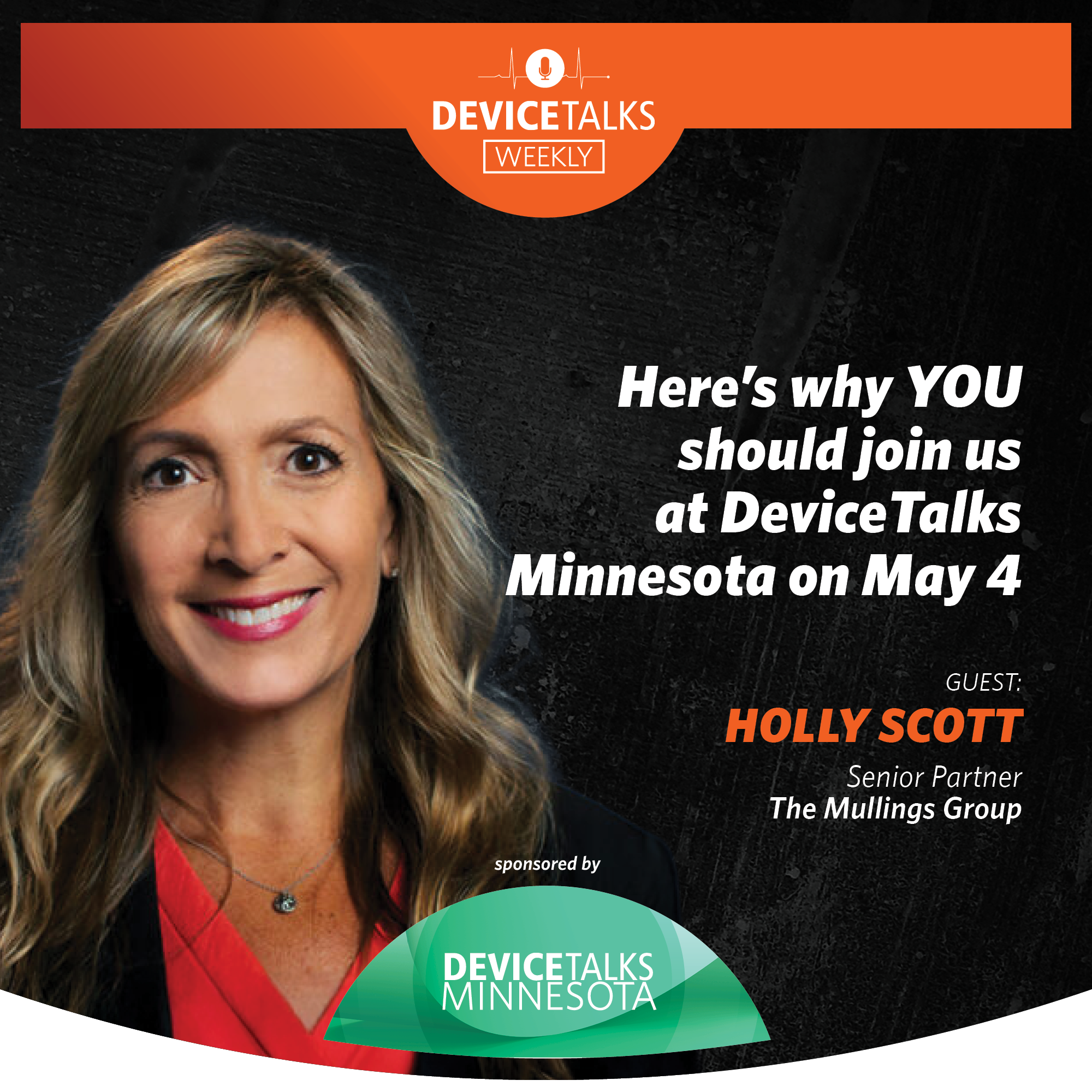
[00:20:37] Speaker A: All right, thanks Chris. Newmarker now it's time for my conversation with Holly Scott of the Mullings Group. I was down at the lovely 160 Studios in Delray Beach, Florida. A bit ago you might have seen some of the videos on LinkedIn. This is a longer conversation that Holly and I had about Device Talks Minnesota. Well, we'll hit upon the highlights once again. I hope you'll join us there at the McNamara Alumni Center. If you haven't registered yet, use the code DTW25 to save 25% off the price of registration. We would absolutely love to see you in the building. All right, let's go.
Hi everyone. Tom Salami of Device Talks here. I'm here at 160 Studios in the lovely Delray Beach, Florida with my very, very good friend Holly Scott of the Mullings Group. Holly, thank you for joining us today. And thanks for supporting Device Talks. We really appreciate it.
[00:21:29] Speaker C: We appreciate you coming down and joining us. It's always fun having you around and
[00:21:34] Speaker A: we're going to see each other again and again and again. You're going to be AT Device Talks Minnesota next on May 4th at the McNamara Alumni Center. And I just wanted to take this time to sort of review the agenda and give folks a sense of what we'll be talking about.
And I mean, we're going to have a full day that's actually a one day event, but starts early in the day with our Women at Medtech, ending with our keynote conversation with Lisa Earnhardt of Abbott. And I'm really happy about the keynotes. We've got Heather Knight of Sylventum, she's chief commercial officer. She joined just last year, brought a lot of energy to that company. Midday, we'll have Mike Blue. He's the CEO of Histastonics and I know you're a company you're familiar with. And then we'll end it with Lisa Ehrenhardt. So what's your take of those three companies? I think they're all very different.
They're all bringing different the leaders I think will bring, I know will be bringing different conversations to the table. But takeaways, when I mention those three
[00:22:26] Speaker C: keynotes, you got three great ones. First of all, I mean pillars of the industry. These are real strong leaders representing the most interesting aspects of medtech, especially in Medtech alley and beyond. This is such a fertile ground. Minnesota's near and dear to my heart because it's such an important, it's a pulse of the industry. It really is.
It's a lifeblood of the industry.
So look, you've got Mike Blue with histasonics. I mean, that's a category creation device. That is a device that will need to be in an MBA playbook one day to share with others, which interestingly enough, might bring us to Device Talks Boston, because if you look at Pedal Surgical, I feel like there may be some synergies there. Very, very interesting. But man, they have really taken off with that device. And for A pat population that couldn't be in greater need. So excited to see what Mike has to share. He's an incredible commercial scale genius. In fact, all three of them, Lisa and Heather, are as well, commercially strong leaders. And talk about right leaders at the right time. You know, you see where Heather, as you mentioned is coming in and of course Lisa at Abbott and what she's taken on and what she's looking to do moving forward with all of their recent successes and a lot of behind the scenes excitement about where the business is going. So yeah, I don't think you could have picked better ones, really. I'm looking forward to it.
[00:23:52] Speaker A: No, they're all definitely companies that are moving in new directions. Heather at Sylvantum. Sylvantum is kind of fun watching a, a new MedTech form. I mean obviously it was a spin out, it came with, with, with some properties but just seeing it sort of take its shape. So I'm excited to, to see where she's taken that. And then Lisa Earnhardt, I mean Abbott's just been such an interesting story. I mean her, her career started out. I know she's always been very customer focused and very patient focused. And you feel that through every deal that Avid's doing, through all their technologies that they're coming out with, with the Libre, with their partnerships with other medtechs, I just feel like that this feels like a future of Medtech. I feel like Medtech is moving more patient forward. I think our story is going to be more visible to the public, going to be more, I think the public's going to be more excited about what medtech can do and I think Abbott is a really strong representation of what the future of MedTech might be. So excited to talk to Lisa Earnhardt for sure.
[00:24:47] Speaker C: Agree. I couldn't agree more. And it's neat to see it out of Minnesota because Minnesota has always been somewhat of a quiet backbone. It's standing up the industry, but you don't see them talk about it as much as other parts of the country in terms of flash and visibility. So having leaders like these three and Lisa in particular, who has such an extensive career of accomplishment with a center on democratizing access and keeping patients front and center of everything she does, it's going to be incredible.
[00:25:18] Speaker A: Great. And I want to also add the importance of Minnesota to MedTech. And Minnesota's had a year that I think we're all happy that they're moving forward from it and we're really happy to have device talks there in Minnesota to plant the Flag and show our support for the area. And one way I'm excited to be doing it is having Manny Vilafana, who is obviously a legend, a living legend in medtech, started several companies that have really charged the Minnesota industry and has really given it, I think the legs that it's been able to build on. So we're going to talk about resilience, we're going to talk about risk. He's got his own company, Medical 21 that's out there that's trying to create a new sort of night and all graft system that if successful could really change the dynamics of healthcare as he's done in the past with his other companies. So I feel like it's a great opportunity to really celebrate Minnesota's Medtech story.
[00:26:16] Speaker C: Manny is a legend, no doubt about it. He's had nine plus exits, successes. He was a founder at St. Jude. I mean come on, you couldn't ask for somebody who could be up there that would be more experienced and able to speak to the resilience and the perseverance of Medtech overall.
And he's non degreed. He was an immigrant family. I mean the story just keeps getting better with how much he has fought through to create and dominate the way he has been able to do and all for some of the devices that the rest of the industry has built upon. So he's, he's the shoulder of giants that people refer to when these young companies grow and learn and are able to iterate and develop new things.
He's definitely a staple there.
[00:27:05] Speaker B: Yeah.
[00:27:06] Speaker A: So we have very four strong legs keynotes to build the agenda on of the value stocks Minnesota. We'll also have some great panel discussions centered around technologies that are really driving Medtech forward. I know an area that's of interest to yours is the heart valve technology. We've got a great panel, almost too many people to mention. We'll have folks from Antares Foldax place into conventional croy valve tri cares.
This is a panel that I started off with two and then three and then I wanted to add more and more and I probably could have kept going because this field has just taken off. What's your sense of the heart valve space?
[00:27:37] Speaker C: Well, I mean heart valve is. Well first of all, not only is it personally so high of interest, it's one of the darlings in the medtech sector that continues to grow in an accelerated way yet in a healthy way and it's really responding to needs that are mechanical, electrical, really synergistic with what the body needs. So if you look at structural heart issues, whether it's ranging from, from valve replacement or any, any real core disease state that they're focusing on it, there's new materials, there's new applications, there's new, there's new opportunities, delivery systems, partnerships ongoing. And what I like about what you're doing in Minnesota, and I'm excited to see is we've got all of those areas really represented in a way with Entera system. I mean, their biometric properties on their valve and their materials are really exceptional. We're seeing activity more in the tricuspid space. They used to refer to it as the forgotten valve because no one cared what happened in tricuspid because everything else was so much more important. But there's so much activity now again kind of coming on top of other accomplishments that we can now touch. We couldn't bother with tricuspid before because we had to deal with aortic and mitral issues that were the bigger challenges. And now that we are dealing with those, how can we protect the individual who's likely going to need reintervention downrange? How are we going to protect the individual who is now compromised because their heart wasn't adequately and balanced in function for many years and it's causing other issues? So this is a robust panel and discussion.
So I'm looking forward to the fact that you have everyone represented at the table there.
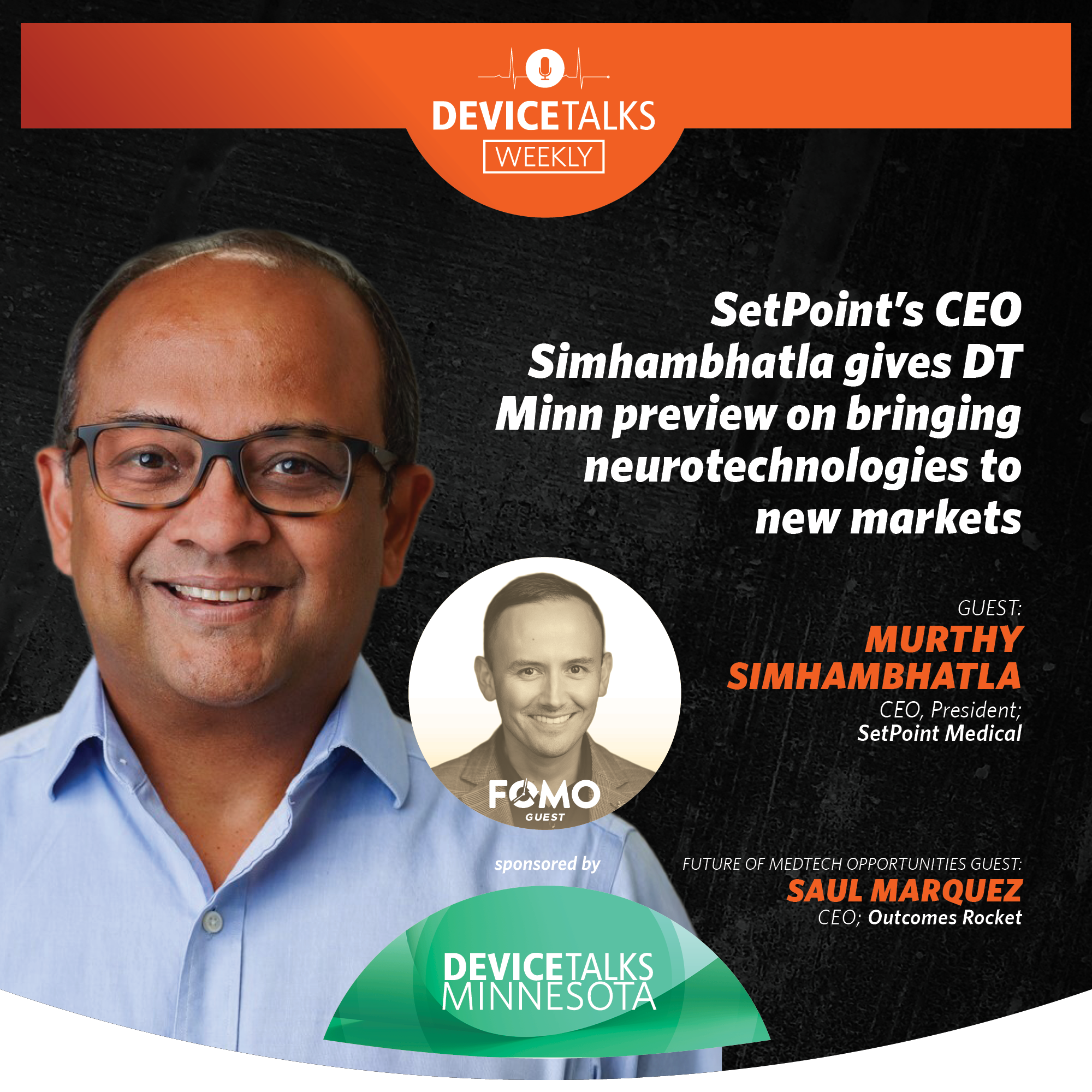
[00:29:21] Speaker A: Another area that we're really focusing on is going to be neuro. And with heart valves, we're talking about the rising of technologies. Neuro is getting into an interesting commercial space where actually see companies getting clinical progress and beginning to build sort of roadways to new markets. So we'll have Rob Binney of Shirotronics there. We'll have Muta Jain of Treo Ventures, which is invested in several neurotech companies. We'll have Murthy Semapatla, the CEO of Subpoint Medical, and Emily Elswick, the president of Medtronic Pelvic Health. They've got a new Neurostim device out there as well. And these are all areas that some are more familiar or have been used. Neurostim has been used in them before. But some are going to break new grounds like Migraine with Rob Binney, finding new ways to help folks who have these crippling migraines. So I'm really excited about the neurospace. I'm really sort of happy that we're taking it beyond sort of the theoretical into the applicable into the commercial. What's your take on neuroscience.
[00:30:17] Speaker C: Oh, Neuros.
There's so much to be said about neurotech overall and you're covering such a spectrum in Minneapolis, which is exciting because it's really got something for everyone. So we've got the bread and butter neurosurgical devices, the neuro interventional devices. They have been a mainstay and continuing to grow as we solve all cardiovascular problems. Neurobe has become the next frontier in so many ways. But what's really been exciting is neuromodulation and even BCI and some of the work there. Any interface with neuro that now gives opportunity to give clinical insights about either diagnosis or predictive medicine or chronic pain. Areas that were notorious for only being handled by pharmaceuticals, by drugs are now being addressed. And it's so exciting for not only individuals and patients and families who have people who are suffering with it, but people who are considering career opportunities.
You're talking about the ability to go to one company, have complex technical challenges associated with implants or non invasive devices, have devices that communicate with clinicians as well as patients, empowering the patient, giving them more information.
[00:31:33] Speaker A: Absolutely.
[00:31:34] Speaker C: Staying ahead of diseases that are otherwise long term, chronic, challenging and debilitating and really giving them tools to manage their life better. So there's. So there's something for everyone. And when you look at the market and what's going on, I would say really, although cardio is still the largest, neuro is the most exciting because there's so many facets of it.
[00:32:00] Speaker A: Absolutely. We've got a lot more on the agenda of that day. We'll be talking about AI, we'll talk about startup strategies. We'll be introducing the medical design and outsourcing top tech picks. They'll be giving technical presentations there as well. We'll of course open up with the Women in Medtech breakfast led by Kayleen Brown. And it's just going to be a fantastic day, I think a fantastic celebration of the Minnesota medtech community. So I'm grateful to you for coming out and for being part of Device Talks Minnesota. And I hope folks will join us at Device Talks Minnesota on May 4th. Go to devicetalks.com for more information.
[00:32:35] Speaker C: Don't miss it. We'll see you there.
[00:32:38] Speaker A: All right, that is a wrap. Thanks so much for joining us on this episode of the Device Talks weekly podcast. Once again, we'd love to have you subscribe to the Device Talks podcast network. Please connect with me, Kayleen Brown and Chris Newmarker on LinkedIn. Also make sure you follow LinkedIn and Mass Device and make sure you join us AT Device Talks, Minnesota. If you haven't registered yet, use the code DTW25 to save 25% off the price of registration.
Go to minnesota.devicetalks.com to register. All right. We will see you on Monday at Device Talks, Minnesota.