Episode Transcript
[00:00:00] Speaker A: Hey everyone, this is Tom Salami of Device Talks. Welcome back to the Device Talks weekly podcast. We've got a great bunch of conversations coming your way.
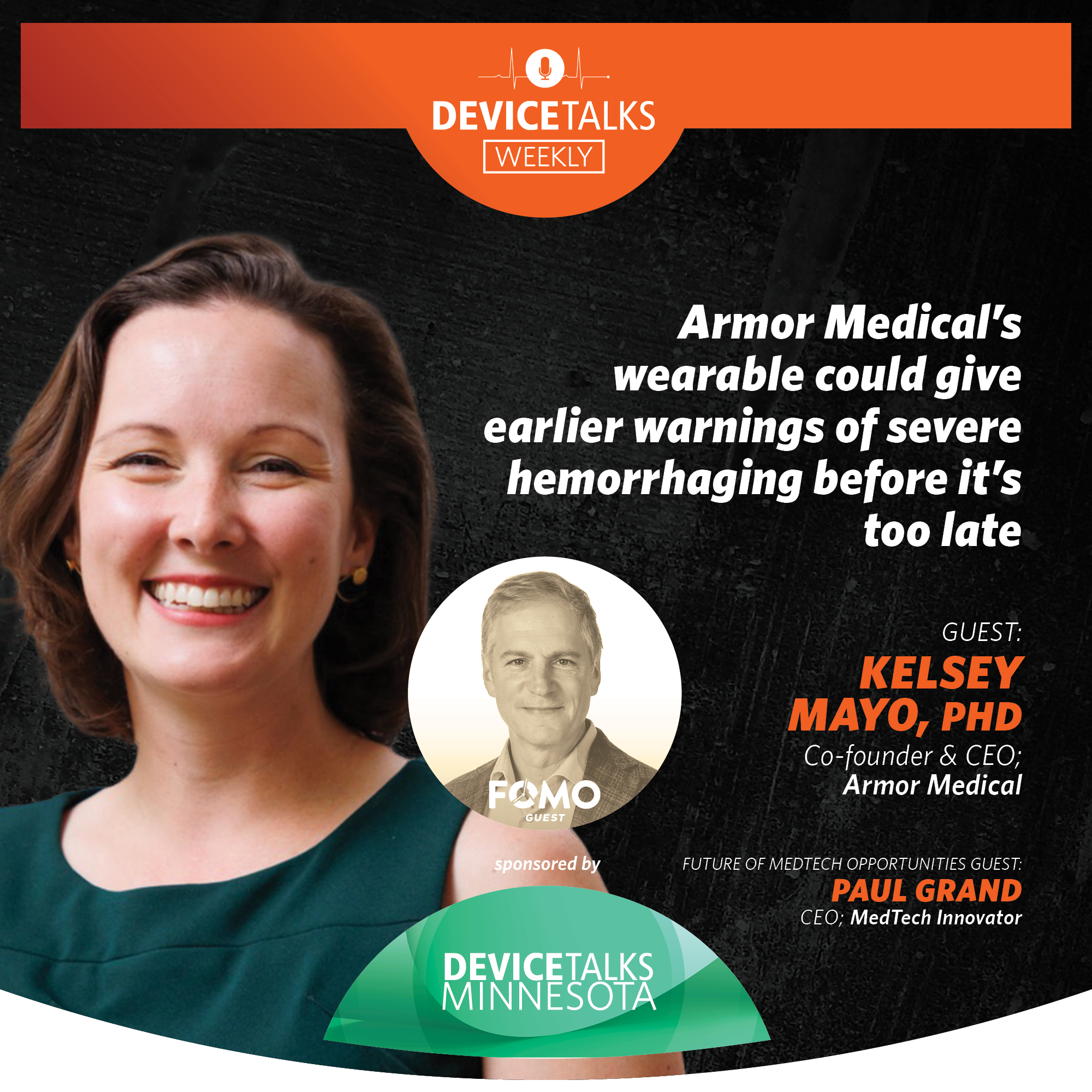
Little later in the podcast I will speak with Murthy Simbatla. He is the president and CEO of SetPoint Medical. He'll be one of our amazing panelists at Device Talks Minnesota. The panel is bringing neurotechnologies to market and you can catch that at 1:30 on May 4th at the McNamara Alumni Center. If you want more information about the Panel, go to minnesota.devicetalks.com and once you see how amazing the agenda is, register and use the code DTW25 to save 25% off the price of registration if you haven't already registered. So would love to see you there on May 4th at the McNamara Alumni Center. Conversation with Murthy will give you a taste of that discussion. You'll also hear from another speaker at To Buy Stocks Minnesota, Saul Marquez of the Outcomes Rocket. He's our FOMO of this episode.
We'll get into this a little later in the podcast, but it was a pleasure to finally connect with Saul and share stories. I'll be on Saul's podcast, the Outcomes Rocket Podcast, in a future episode as well. So we got to do a little swaparoo with the podcast interviews. So thanks to Saul and Murthy for being part of Device Talks Minnesota. I sincerely hope you will be as well. Join us on May 4th at the McNamara Alumni Center.
A week before that, we'll be having our Device Talks Tuesdays conversation brought to you by our fine, fine friends at Noventa. The topic is beyond the Motor Unlocking Precision with Frameless Motor technology. So if you're in surgical robotics or medical devices that move, check this conversation out. It's going to be chock full of information and insights and a new product that you might want to know about. So go to devicetalks.com to register for that. That one is free. You can watch it live or on demand.
You can get your questions answered anyway, but I really love having people on the call with me. So I hope you'll join us Tuesday at 4pm for our Device Talks Tuesday's episode. Once again, I hope we'll see you at Device Talks Minnesota on May 4th. Of course, Device Talks Boston is coming up on May 27th, 28th. We'll start focusing on that once Minnesota has passed. But so much going on here and it's only good when you're part of it. So don't be shy, come out, say hello, be Part of these in live conversations.
Now let's get this podcast started.
All right, you ready for this?
[00:02:34] Speaker B: Ready.
[00:02:52] Speaker A: Chris Newmarker. How are you, sir?
[00:02:55] Speaker B: Doing well, Tom. Doing well.
[00:02:57] Speaker A: So I got a very cool message the other day on LinkedIn from a listener, Adriana, who says, my fiance and I love your podcast and listen together every week.
[00:03:10] Speaker B: Wow.
[00:03:11] Speaker C: Yeah.
[00:03:11] Speaker A: How's that, huh?
[00:03:12] Speaker B: That's nice. Yeah.
[00:03:13] Speaker A: So I was thinking, since we're so, so skilled at the marriage thing, you have any advice for the, The, The. The young folks? I, My, My. My suggestion is always go to bed angry. I think that's a good one, right? Isn't that how it's supposed to go?
[00:03:26] Speaker B: Oh, yeah, totally. Yeah. I mean, that just, like, really just
[00:03:30] Speaker A: pick a fight right before bed.
[00:03:31] Speaker B: Oh, yeah, absolutely.
[00:03:34] Speaker A: That does a. That does a world of good for them.
[00:03:36] Speaker B: Really? Really. Like, you know, just.
Yeah, no, I mean, no, I mean, you. I mean, just don't be good to each other.
[00:03:43] Speaker A: Pay forward very.
[00:03:45] Speaker D: Yeah.
[00:03:45] Speaker B: Don't communicate.
[00:03:46] Speaker A: Bury those resentments deep. Like, don't let them out.
They'll go away eventually.
[00:03:52] Speaker B: Y' all had great grandparents like that, quietly around the farm and, you know, you're like, you know, they, you know, I mean, and eventually one of them passes away. I mean, it's okay.
[00:04:08] Speaker A: Works out.
[00:04:10] Speaker B: Works out eventually.
[00:04:12] Speaker A: That was a very nice message, and it's nice to have listeners like that. So we have device talks, Minnesota coming up in, gosh, week and a half.
[00:04:22] Speaker B: Yeah, a week and a half, man, it's gonna be fantastic.
[00:04:24] Speaker A: You went out and checked out the McNamara Alumni center this week, right? You were at.
[00:04:27] Speaker B: It's looking good. Yeah, I was. I. I got over to the Design and Medical Devices conference for a day, and yeah, the McNamara is looking great at ever. Good, good conference. Good. This week, you know, at the, at the U. I mean, they were actually celebrating their 25th anniversary.
[00:04:41] Speaker A: That's great.
[00:04:43] Speaker B: Yeah, so they, you know, it's always. I mean, my gosh, there are just so many familiar faces that I've been going to that conference for, you know, for about a decade now. But it's great to meet with that MedTech community around the university here in the Twin Cities and looking forward to the, you know, community we're going to have together there in just a week and a half. And it's cool, too, like, you know, you know, it's fun. I got to. I said hi really quick to Hubert Lim, the head of, you know, the Bach center, but of course, he's running around keeping everything going, so, you know, like. But you know, don't worry, don't worry, Hubert. Like when we see at DeviceX Minnesota it'll be the opposite way around. Like you'll get to actually enjoy, enjoy the Mac tomorrow while you see us like running around like making the magic happen.
[00:05:35] Speaker A: Yes, I was great going to the Madtech Innovator Radar forum a couple of weeks ago and not having to run anything. It was just like, ooh, I can just enjoy a conference. And they are quite enjoyable. So Hubert will be presenting with Danny Sachs at Device Talks Minnesota. So they'll have a discussion on startups. So folks want to check that out on the agenda.
But very happy to have them on the program.
[00:05:56] Speaker B: They run great programs at the university. So I'm really glad that they're a part of this show here in a week and a half to explain to people more about the great good work they're doing.
[00:06:05] Speaker A: Absolutely. No, I'm very looking forward to. I got an email from our attendee from last year was asking if we're going to do another baseball game or another post networking event. Unfortunately the Twins are out of town.
But, but that was a good time last year and we'll, we'll, we'll definitely have a good time this year as well. So folks can, folks can register at, at Minnesota Device Talks.com and of course use the code DTW25 to save 25%. And if you have any questions, send me a DM. Send Chris a DM on LinkedIn and we'll, we'll tell you what you need to know to, to, to show up on May 4th.
[00:06:39] Speaker B: Yeah, we'll, we'll do, we'll do a Twins game another year for sure and hopefully the Twins keep their like upward trajectory.
You know, I did run into like another one of our regular listeners actually. I ran into a number of people. I mean it's just great like all these events like that, you know, a lot of people, it's a common thing I hear is like oh, I listen to you and Tom on the podcast and just like I'm just grateful that we're like helping out that we're able to bring people the news, that we're able to bring people insights, you know. So I'm just, I'm just really thank you to everybody. One person was, was a little bit Lubovic Labat who's you know, from Neo Bionica used to be a ford of based out of Australian raging league from France. And so like Ludovic was telling me like I just always laugh listening to you and Tom But I don't really understand any of the baseball talks.
I promise him sometime we'll work in some soccer. I mean especially like he, he let out, he got all, he got animated when I mentioned, you know, France and the World cup, you know, four years ago. So, so there you go. Maybe we'll have to work in something at the World cup this, when it's going on.
[00:07:51] Speaker A: Like, you know, so I'll give our
[00:07:54] Speaker B: soccer lovers more of a, maybe we'll get Sean.
[00:07:56] Speaker A: Yeah, get Julio on there. Yeah, for sure.
[00:07:58] Speaker B: Sean, Sean loves British soccer. He can just, you know, yeah, we'll,
[00:08:02] Speaker A: we'll, we'll bring in him when the World cup starts. We'll have Sean on the podcast to offer his, his, his update along with the newsmakers. I think people would want to definitely get some soccer coverage on this podcast.
[00:08:12] Speaker B: The sport we call soccer, but the rest of the world calls football, which
[00:08:15] Speaker A: makes a lot more sense, actually.
[00:08:16] Speaker B: Yeah, it's true.
[00:08:19] Speaker A: All right, Chris Newmarker, let us roll into the big news of the week from the pages of Mass Device, of course, the industry's leading news source.
[00:08:30] Speaker B: Well, you know, thank you very. Yes, exactly right. We are the business journal for the medical device industry. Like we were rolling out like you know, up to 10 stories a day about like goings on in our number five on the list backstory at Device Talks, Minnesota, another shameless show plug. I'm going to be doing a panel with top executives from five companies that are working on next generation heart valves. And these companies were just so interesting. I was like, well gosh, I want to give people a little bit more about, hey, this really interesting panel to show. But I did a roundup on 5 next gen hard valve replacement companies. You need to know. And it's, you know, the five companies that are going to be on this panel.
But it's actually gotten some good attention over on Mass Device. So I think this is a good group we have and just one of many reasons to check out this event that's coming up.
So like Antares Technologies, Croy Valve, Foldex, Laplace Interventional and Tricares.
[00:09:36] Speaker A: Yep, I kind of got greedy with that one. I just kept finding great companies and inviting them to participate and they all said yes. It was like, oh, this is a great problem to have have so folks can get a real in person wrap up or sort of overview of this, the heart valve space. And of course I posted this something about a video I did with Holly Scott earlier this week, sort of highlighting them as well. So excited to have this panel Very glad you're taking it over. I know you're going to be leading the conversation. I know you're going to have them present just a slide or two of their valves and their devices so people can see what you're all talking about.
[00:10:13] Speaker B: Yeah, exactly. I mean, we're going to make it mostly just a really good conversation.
It always helps, especially when you're talking about technology like this versus somebody. Just saying my valve is more innovative because it's so much better when there's a picture up there that people can actually see what it looks like and see some helpful bullet points or whatnot.
[00:10:34] Speaker A: Absolutely.
[00:10:35] Speaker B: What the top features are. So we'll run through those really quick and then we'll get into more good discussion about the big trends that we're seeing right now in heart valves.
[00:10:45] Speaker A: Sounds great. All right, Chris Newmarker, roll on to number four.
[00:10:48] Speaker B: Hey, number four on the list we have.
You know, I mean, I mean, it's interesting. I mean, I mean, just more. I mean, we just do a story on Abbott completing enrollment in an intravascular lithotripsy platform and it's already getting a lot of attention. I mean, it's just more proof that this is just like one of the really hot areas of medtech right now. And so, yeah, Medtronic. Sorry, sorry.
Avid saying that they have successfully completed enrollment of all 335 patients in their tectonic coronary IVL study, bringing them closer to what they're saying is a new and much needed vessel preparation option for people with coronary artery disease.
[00:11:41] Speaker A: No, it's certainly. We saw the Stryker acquisition of ABS a couple of weeks ago. Another indication of the interest in the space.
Great to see Abbott moving forward. I was actually, I was looking this up. I didn't realize that the technology came through the cardiovascular systems acquisition. That was a surprise to me. Oh, wow. Yeah. I didn't know that. So between Stryker and Boston Scientific and Abbott and of course Johnson and Johnson Medtech. Does Medtronic have an IVL play yet? I don't know if we.
[00:12:13] Speaker B: No, they do not right now. So that's. Yeah, that's.
That's going to be interesting.
[00:12:19] Speaker A: Yeah, I mean, there's a few other private companies out there, I'm sure some other programs that we're not aware of. So Fastwave, of course, being one of them, but.
All right, well, we'll see what this space will.
Where it will take us. But certainly it's between this and pulse field ablation.
It's amazing. Just sort of the number of Technologies that are just like, five years ago, we never heard of them, and now there's just these growing competitive markets in this space. So medtech just is an amazing industry where things just move very, very quickly.
[00:12:50] Speaker B: Yeah, it is. I mean, it's amazing that things can seem like kind of set for a while, then all of a sudden, bam, we just get like, this new period where there's just all these really, really fascinating technologies.
[00:13:00] Speaker A: Absolutely. All right, Chris Newmarker, what is number three on your vaunted Newmarkers newsmakers list?
[00:13:06] Speaker B: Hey, number three on the list, we've got Johnson Johnson announcing plans are going to have a new AI module on their cardiac mapping platform. Like the Heart Rhythm Society annual meeting is getting going this week, and they have plans to launch it there, but it's leveraging AI with the Cardo mapping system to automatically, like, turn intracardiacardiography images into detailed, detailed maps. So really interesting.
[00:13:44] Speaker A: Yeah, really moving. We're bringing AI deeper into the technology and really kind of creating maybe giving it a competitive edge against some of the other players in the space. As we talked about, this space is highly competitive, and we'll hit upon that on the next item as well.
But this maybe will be a distinguishing feature for Johnson and Johnson.
[00:14:06] Speaker B: Yeah, I mean, this cardo mapping technology, it pairs with their veripulse pulse field ablation system. So being able to be like, okay, we're up in the game on our mapping that goes along with our PFA system. I mean, that could be like an added value for.
[00:14:24] Speaker A: Yeah, absolutely.
[00:14:24] Speaker B: Fantastic.
[00:14:25] Speaker A: All right, great news, Chris Newburger. Let's roll onto the number two that I teased.
[00:14:29] Speaker B: Yeah, number two on the list.
Well, Boston Scientific cutting their 2026 guidance. A bit of a reset over there. CEO Mike Mahoney saying that this is like reflecting unanticipated headwinds, some changing business patterns, and this, the guidance was primarily related to, you know, their EP Ferrier Ferrops pulse field ablation as well as, like, that Watchman LAAC device that goes along with this. And, you know, they mentioned urology as as well. So, I mean, Faripulse EP came short of expectations, you know, with the competitors gaining there. So, I mean, gosh, about a year or two ago, really looked like Boston Scientific was really getting a lead in that PFA space with Verapulse. But now we're seeing just a lot more competition, which I think overall that's good news. I mean, competition usually means more innovation, usually means people doing new things, and overall, it looks like investors were pretty Positive about this. Actually. They appreciated the reset. Cause I see Boston Scientific stock is up more than 3% this week.
[00:15:48] Speaker A: Nope. Good, good, good investor management by, by Boston Scientific executives for sure.
And yeah, as we said this, this we had a couple of years ago, I think we had. Boston Scientific is the dominant player in pfa and we kind of had said Firepaws was going to run away with it and that's not happening. They're clearly, clearly the leader, but they're facing some competition and I'm sure they'll react next year or this year with an acquisition or a move or something that's going to give them, give them another boost. So yeah. Yep. We'll see where they go from here.
[00:16:21] Speaker B: Yeah, Boston Scientific is definitely not a company that stays put with things they, they get, they keep moving.
[00:16:26] Speaker A: Yeah. And I was going to at the top, when you'd mentioned Medtronic, I was going to declare this. Oh, this actually might be a Medtronic free newsmakers, but no sir.
Oh no, Medtronic is in the number one slot, man.
[00:16:39] Speaker B: They are. I mean they are really. Medtronic is really holding true on their promise that they're picking up investments, they're picking up acquisitions.
I mean like the big news this week was that Medtronic was leading $100 million financing for artery denervation tech developer Polnovo Medical. So Medtronic has renal denervation. I mean this is tech that's involved with a pulmonary artery denervation for pulmonary hypertension.
So still a denervation system but like basically treating another condition.
So yeah, I mean they're kind of the lead financer on that. And then also this week they closed on their $585 million acquisition of Cathworks.
[00:17:27] Speaker A: We outlined the Cathworks acquisition a month or two ago when it was announced.
Speaking of Polnovo and I think I've been sloppy with my writing. I think I've already said that, that simplicity in renal deriner treated pulmonary hypertension. But I guess pulmonary hypertension is really a very separate thing than systemic hypertension. It's a very precise disease that it does not hit. So just kind of shows you how this technology and this sector is evolving.
[00:18:00] Speaker B: You're kind of treating one thing and now it's kind of like similar. I mean definitely Paul Novo is, I mean this radio frequency ablation, like simplicity spiral. But they're going and treating something different in the body.
So yeah, there's other things that you can have denervation with.
[00:18:27] Speaker A: It's gonna be interesting to see how these ultimately plays out when folks have the option of.
I know this is more for drug resistant hypertension, but maybe there's a time when people can choose the drug regimen versus a one time treatment.
And I have to think one time treatment's a pretty appealing option as opposed to taking a cocktail of drugs every day that can have this side effect or that.
[00:18:49] Speaker B: No kidding.
[00:18:49] Speaker A: Sometimes you hear these ads on. Not to laugh, but on TV for some of these drug ads and you hear the side effects, you're like those poor people. For them to endure what the side effects are, the disease must be just terrible.
[00:19:00] Speaker B: Yeah. I mean, especially when, I mean.
Yeah, I mean, I'm not a super expert on this, but like, like pulmonary hypertension, I mean, that's just a whole other beast above like just the regular high blood pressure, right?
[00:19:11] Speaker A: Yeah, no, it's. It's definitely a different variant of it and one that's difficult to treat. So.
So great news for Medtronic. Nice to see that.
[00:19:18] Speaker B: I mean, right? I mean if you have a choice between like a bunch of drugs, I mean, even with regular hypertension, I mean, it's like, it's like the, you know, a drug's a drug and a drug has side effects potentially. And yeah, you just, it could be an attractive option, especially as it gets more data behind it. Yeah, just getting something one and done sounds pretty nice.
[00:19:41] Speaker A: Absolutely. And regarding your Cathworks acquisition, I was going to make a snarky comment on your LinkedIn post. I think you said, it's nice to see Medtronic do tuck in acquisitions like these. And I was like, oh, back in my day, 585 million was not, not a tuck in. That would have been a huge strategic buy. But now it's just, it's only half a billion dollars.
But I'm like, you know what? I sound old enough. I don't need to put that.
[00:20:10] Speaker B: I'm sure if someone gave you half a billion dollars, you just continue on at least the rest of the podcast.
[00:20:18] Speaker A: Tom. Hello?
Push stop recording.
[00:20:30] Speaker B: I don't know what happened. I just heard gone.
[00:20:33] Speaker A: See you later, suckers.
No, I would keep working. You know me, thanks.
[00:20:39] Speaker B: Yeah, even.
[00:20:41] Speaker A: Wouldn't change my life at all.
[00:20:44] Speaker B: Just the same, I once, I once years ago had a, like was working at a paper and an editor we were joking around with. I was like, you know, even if I won the mega millions, I think I just love reporting or I'd stick here and keep on working. He's like, no, I'd fire you.
He's like, you're not going to sit there and be like, oh, it's all right. I can just, like, pay for it,
[00:21:05] Speaker A: you know, I've got nobody. No one would want to be around you. Like, oh, here comes. Here comes Richie Rich over here. You know,
[00:21:16] Speaker B: it's so horrible. I'll be flying the jet.
[00:21:20] Speaker A: Give the minimum wage job to somebody else. Chris, don't be hugging those. Yeah, yeah.
All right, Chris Newmarker. So one more week until device talks, Minnesota. We'll be at the McNamara Alumni center on May 4th. Once again, if you want to attend and meet us in person. Why wouldn't you? We're delightful.
Make sure you reach out.
[00:21:40] Speaker B: I mean, aren't you. You're having fun now. Don't you want to have fun?
[00:21:43] Speaker A: And we're like this all the time. We were always laughing and laughing. Nothing but pure joy.
[00:21:49] Speaker B: I do. Usually when I see people and they mention the podcast, they're always like, oh, you sound exactly like you do in the podcast.
Say, you're a lot shorter than I thought you were.
[00:21:59] Speaker A: I guess that's a comment. I was going to say compliment. I'm not sure what it is.
[00:22:06] Speaker B: It's just what I am.
I'm a little on the short. You're a little on the taller side,
[00:22:10] Speaker A: you know, but on zoom, we're all the same.
[00:22:13] Speaker B: We are all the same.
[00:22:17] Speaker A: All right, Chris Newmarker. Where can folks find the top five news every day of the week except for what, Saturdays? No, Saturdays. They get their top seven, right?
[00:22:25] Speaker B: Yeah, get the top seven. I mean, yeah, if you, I mean, if you enjoy getting the. The news every week here on the Device Sucks weekly podcast. I mean, just go to Mass Device right near the top of the homepage. We got a link for us subscribing for our daily E newsletter. So we got our plus five Monday through Friday with the top news of the day. And then I do a nice roundup of like the top top stories for the whole week or, you know, actually these days, like, senior editor Sean Cooley is actually doing a fantastic job, like, laying out a lot of these. But yeah, Sean, me and Sean, what are the top stories for the week? And give people a nice recap on Saturdays as well.
[00:22:58] Speaker A: So, yep, could join us next week and senior editor Sean Hooley will come on and teach us what Offsides is. So really excited about that.
[00:23:07] Speaker B: That's gotta be fantastic.
[00:23:08] Speaker A: Get our World Cup. World cup conversation.
[00:23:11] Speaker B: We're gonna do it.
[00:23:12] Speaker A: Yeah. Yeah. We'll have all the rules down by the time it starts.
[00:23:16] Speaker B: Ludovic we got you covered, man.
[00:23:20] Speaker A: All right, thanks. Chris Newmayer. Great job with the Newmarkers newsmaker.
[00:23:24] Speaker B: Yeah, thanks. You're like Chris is going on tangent. All right, thank you everybody. Good as usual. I hope to see you at Device Talks Minnesota in a week and a half.
[00:23:32] Speaker C: Woohoo.
[00:23:33] Speaker A: All right, thanks, Chris. Newmarker for those Newmarkers newsmakers. Now it's time for our FOMO visit with Saul Marquez. Saul's the CEO of Outcomes Rocket. Outcomes Rocket is a market research and end to end marketing execution agency that helps medtech and health tech organizations grow their impact and accelerate growth. Growth.
I've gotten to know Sol over the years as we'll talk about the interview, and was happy to meet him a few weeks ago and very happy to have him as part of Device Talks Minnesota and Device Talks Boston. You can see Outcomes Rocket at both events. Now let's hear this FOMO interview with Saul Marquez.
Sol Marquez, welcome to the podcast, Tom.
[00:24:16] Speaker D: Such a pleasure to be here. Thanks for having me.
[00:24:18] Speaker A: It's been great to connect with you. You and I have sort of been podcasting brothers for a number of years, hearing each other's voices, maybe connecting on LinkedIn from time to time, but never actually meeting until we connected at the Medtech Innovator Radar forum a couple of weeks ago. So great, great, great timing.
[00:24:37] Speaker D: That was awesome, man. I'm so glad that we finally, finally got to meet. Way overdue, way overdue.
[00:24:44] Speaker A: And you're blessing us with your presence at Device Talks Minnesota and Device Talks Boston. Grateful for that. It's going to be great to have Outcomes Rocket there, helping our attendees understand the challenges of going to market. And this is an area you've really explored deeply. You've got a really detailed report that folks can download from, from your website and I'm sure you'll get into in a moment. But before I get into into all that juicy stuff, Saul, how'd you found your way into the, into the medtech industry?
[00:25:11] Speaker D: Yeah, you know what, it started in college. I actually was went to Miami of Ohio. I went to a career fair where Stryker Communications recruits heavily from Miami of Ohio. And I remember sitting in the audience thinking, there's this cool thing called MedTech. Wow, the impact you could have.
And because I was a history major, Tom, they didn't want to hire me really.
I studied classical humanities and I was always left with, dang, I saw it and I never forgot it. And I learned that MedTech will take someone with a strong sales background. So I took the first job that I could At Cintas, the uniform people, which is another kind of big business that recruits out of Miami. I cut my teeth, was very successful there for. For two years, and then got picked up by. By Stryker, where. Which was my first med tech job, carrying the bag. And the trauma. And trauma business to begin with, and then the spine business.
[00:26:17] Speaker A: Trauma is quite the way to enter the. Enter the industry.
[00:26:19] Speaker D: It leaves an impact on you to this day. You know, at our agency, responsiveness is one of those values that we carry, and it was built in from those early mornings and late nights, hip fractures, wrist fractures, all the stuff that we had to deal with. So, yeah, it definitely leaves an impact,
[00:26:40] Speaker A: but that's it, right? I mean, that's why you're doing this. I mean, you're seeing patients get treated with the devices that you are making available. So that doesn't get any more real than that.
[00:26:50] Speaker D: It's as real as it gets, you know, and that's why the work that we do really, you know, from carrying the bag to going up the ladder. My last role was at Medtronic, where I was a commercial leader there.
I've had the opportunity to see both the great things that can happen as well as the big challenges that hold companies back. And so I love Medtech. You know, I bleed it, I believe in it. You know, you mentioned, you know, we had you on our podcast and you mentioned the tangible. And, you know, while there's so much SaaS and intangible AI things out there, it's still the tangible that makes us tick. And that's why I keep gravitating back to MedTech. It's my home.
[00:27:34] Speaker A: Absolutely. All right, well, you are now, I think, a very important player in helping medical devices.
As much as we love the tech and we love the romance, they need to be businesses and they need to sell to survive.
How is Outcomes Rocket helping with that?
And. Well, first, perhaps before I get into the solution, let's sort of identify the problem.
What are the challenges for medical devices that are trying to bring products to market? What are.
It's a myriad of players you need to sort of convince.
It's a whole different, one ecosystem upon another. You need to kind of find a way in, give me a sense, a lay of the land of some of the challenges facing the medical device industry when it comes to selling their products.
[00:28:20] Speaker D: Yeah, Tom, I appreciate that question.
And though one thing that I'll say is there's a quote that we really love on our team and we share this with our clients, and it's from Sun Tzu, the Art of War, and he says that tactics are the noise you hear before the war is lost.
And what ends up happening in marketing and in commercialization is that you have so many options.
You have podcasts, email campaigns, conferences.
You've got all sorts of, you know, signal tools, AI now that it's. And when the business needs results, you go to a tactic right away because you want to do something to make the needle move.
[00:29:07] Speaker A: Yep.
[00:29:08] Speaker D: And, and, and that's a big mistake. That's a big mistake that a lot of organizations make interesting.
That's why we say, look, when Sun Tzu said tactics are the noise you hear before the war is lost, you really have to understand the entire landscape. You know, what are your supplies?
What is the competition doing?
How long can you go for? What are your advantages?
And so our model that we use is the 3D model, Tom. So our 3D model is Discover, define and deliver.
And on the discover side is where you do all the landscape analysis, competitive intelligence, understanding your Personas, what are their pain points?
Are you going after the right segment? Do you have the strengths that they will respond to? That's, that's discover. Then you go to define, and the define stage, you lay out the roadmap of what it's going to take and the KPIs that will define success along that roadmap. And then in the deliver phase, now you start to decide, okay, out of these 200 options that I could choose from to go to market, which ones will I deploy strategically in order to get to my end result with, with the best results for my organization?
With this framework, Tom, the, the approach to marketing and sales becomes algorithmic. It's so cool because like, and, and the example that I use is like a Rubik's Cube.
Once you figure out how to solve that Rubik's Cube, no matter the position that it's in, you could always get to that end goal, which is same color on each side. And, and so this is the algorithm that we run, the process that we run. It's the 3D model so that you're not left with just trying a bunch of tactics and then at the end of the quarter, you got more tactics to try and no pipeline.
[00:31:07] Speaker A: But are the 3Ds more challenging in medtech or less? Because the, I think the customers are define. You know, you have certain specialists you're going to sell to. You have certain hospitals that your product works in. You have certain people, patients who need that particular device.
I would almost think that it's easier to define those things in medtech than maybe in another industry where it's a little more nebulous? Or does being such a regulated, segmented industry really create unique challenges that medical device companies have to overcome?
[00:31:38] Speaker D: Yeah, look, I think the Personas are there so you know who you're selling to. Without a doubt, the nuances of the value proposition is where the opportunity comes in and so understanding the actual pain points with the depth that will get them to be inspired to take action.
And so that's where we're able to uncover insight to help understand key problems that will help. Or, or maybe there's a timely thing that's happening, whether it be with a billing code or, or, or an upcoming change right. In regulation that like, oh, now is the time to strike here because of the way that the pieces have moved. So it's more so listening to kind of those key pain points and how the market's shifting to create those pockets of opportunity that then help you get ahead, you know, get you a year in advance so then that the competition's catching up now instead of you being in their shoes.
[00:32:40] Speaker A: Interesting.
[00:32:41] Speaker D: So it becomes more of that.
[00:32:43] Speaker A: So I know you track the startup real closely.
What kind of messaging and work a lot with the smaller companies. What kind of messages messaging would you have for a smaller company out there? Sort of looking at this long, winding, uncertain road ahead, what do they need to know to forge forward?
[00:33:04] Speaker D: Totally. And Tom, so I'll share. We do work with enterprise medtech as well as startups in mid. So the cool thing is that we have the lens there. I'll share with you. Q1 really kind of showed us in digital health, 7.4 billion in investments. That's the highest since 2022. And when you look at that, 60% of those investments landed in just 19 mega rounds.
[00:33:29] Speaker A: Wow.
[00:33:30] Speaker D: And so you know, you, you have, and you know Abbott paid 23 billion for exact Sciences, right? Like, yep. So, so what we're looking at right now is. And, and you, you mentioned this too, Tom. Like we've keep hearing it, but it's important that we cement the reality is that once you have the approval, that's table stakes.
It's getting those logos, getting those health systems to say yes, building out your, your user base is what actually the strategics start to see you as a de risked opportunity that they can deploy their platform of salespeople, of marketing engines to, to scale that complements their, their, their, their, their particular, you know, skill set or, or therapy base. So what we're looking at right now is really operationalizing it. And one thing that I'll say is like the big opportunity. So in this report that we did, the go to market report, we interviewed 511 leaders in marketing B2B. Okay. And so we saw that 37% of B2B leaders, they treat GTM as an integrated revenue framework.
And so when you do that, that's when you start to see success. And if your VP of sales, for example, and your VP of marketing can't agree on what a qualified opportunity is, you have an issue.
This is a revenue discipline issue that if you can hone in on it and get on the same page now you have the, the marketing and sales engine working in tandem.
You start to see pipeline grow in that way and you start to get those opportunities. And what else? The big tip for small companies that I'll say is less is best.
What I will tell you is that it's possible for you to define 5 to 10 target accounts and hyper focus on those accounts and land two to three.
And then those become your case studies and testimonials to continue to grow instead of trying to boil the ocean.
And so account based marketing is one way you do that. We put a report on account based marketing in Q1, Tom, that I'm also happy to share that has some insights in it. But account based marketing is when you treat one account like an entire market.
I love that you get to know it inside and out. Yeah.
[00:35:59] Speaker A: And your podcasting skills show, because that was the next question I was going to have.
That's the message you have for small companies out there. So you've covered that. So you'll be at Device Talks Minnesota, giving a great presentation. Talk quickly about the talk there.
You'll have someone presenting with you as well. What's the topic going to be?
[00:36:18] Speaker D: Yeah, so you know, we're going to be talking about how we go from insight to commercial success.
And the reality is that, you know, whether you're a strategic medtech company or you're a mid sized medtech company, you've got a lot of insights. You know, you've had the shop come in and do the research and say, hey, here's a shiny deck of all the things you can do. Good luck, we'll see you next time you need us.
And so the reality is you need more than that. You need to figure out how to operationalize this. So the conversation I'm having with Caitlin Mayer, she's the senior director of marketing, US Marketing at Medtronic Acute Care Monitoring, is sort of the work that we've done on the insight side, but not stop there. We actually plugged in on a 90 day sprint to take those insights and actually communicate them across the organization.
Met Affairs, Marketing, Sales, right, All of these departments so that they're all singing from the same hymn sheet and moving that metric. You know, we talked about Discover, define, deliver that defined side.
What are the metrics that you're going to get after? And let's move the needle on those key metrics so that you could create pipeline. Because, you know, the thing that, that we always talk about is like marketing gets blamed for the leads that they didn't create and they get credit for the sales that they didn't sell.
[00:37:45] Speaker A: You know, it's like great place to be, right? It's like, how do you win?
[00:37:49] Speaker D: Right? The way you win is you get aligned with sales.
And so I'm a firm believer, like I was a sales leader at many of these companies, Tom.
And when I have had the biggest success when marketing and sales can align on definitions and what winning is and then the motion to win. And so Caitlin and I are going to be telling a story about how we've done that with her and her team at Medtronic, but also, you know, kind of frameworks that our audience can leave with that will be immediately useful to them. So I'm really excited for the opportunity to have that discussion with the crew over in Minnesota.
[00:38:30] Speaker A: Can't wait to have you there. Good to see you twice in, twice in three weeks after never meeting each other before. So we'll post a link to the report in the show notes. But of course, folks should come out to Device Talks Minnesota and meet the man himself. Sol, thanks for joining us on fomo.
[00:38:47] Speaker D: Such a pleasure, my friend. Thanks for having me, Tom.
[00:38:50] Speaker A: All right, Once again, thanks to all my cousins for being part of Device Talks. Look forward to seeing you at Device Talks Minnesota. Now it's time for our keynote conversation. I spoke with Murthy Smambatla. He is the president and CEO of SetPoint Medical. We'll talk about Murthy's career. I got to know him back when he was president of Abbott Medical Optics, but he took the job at Setpoint. And he'll talk about how he found the opportunity and what convinced him that this was an effort worth undertaking. Anyone who's been following Set Point story knows it's been a long time making. I think it was founded in 2007, but this is what Medtech is all about, folks. It's about not giving up and finding ways to succeed. And you'll hear how they did that in this interview. Let's get started.
Murthy Sivambatla, welcome to the podcast.
[00:39:46] Speaker C: Pleasure to join you for the conversation.
[00:39:48] Speaker A: Yeah. We're going to see each other in just over a week. You'll be at Device Talks Minnesota. So thank you for being part of that.
And the purpose of that panel is to explore the building new markets for neurotechnologies. I feel like Neurostim has been not a science project, but it's been a hopeful, a hopeful part of medtech for a long time. Now the fun part begins when you can actually start helping patients for SetPoint in particular.
But before we get into SetPoint story. Murthy, how did you find your way into the medtech industry?
[00:40:21] Speaker C: Well, I started my career in the Bay Area with an electronics and aerospace company called Raychem.
And Raychem had a lot of the materials technology that eventually made its way to medtech companies.
Technology like light null.
And after I spent a few years there, I followed some folks over from Raychem to a company called Guidant that is developing cardiac stents. And that's how I got my career started in medtech. And you get hooked to this industry where you're helping people. There's a demonstrable impact of your products on people's lives, and there's no looking back. After I started at Guidant.
[00:41:05] Speaker A: Yeah, no, I'd love to. So you were at Raychem as an engineer. So you came into this as an engineer. I'd like to talk about Guidant for a moment. We'll have Lisa Earnhardt at Device Talks Minnesota as well. And everyone I talk to, she's a Guidant person. Also, I've yet to find someone to speak ill of their experience there. What was it about the guidance culture that really gave you the direction that you currently have and just uplifted everybody else? It seems to be just a wonderful place to work.
[00:41:31] Speaker C: Well, Garden was special in many ways. It was a very patient, focused company with a very open culture, with a lot of communication up and down the leadership chain.
And, you know, the company was excellent at rapid product development.
They launched a new angioplasty balloon catheter and a new stent platform every year, which is quite remarkable if you think about it.
And the other thing that is remarkable about Guidant was the amount of time you spent out in the field as engineers with clinicians.
And the company gave even entry level engineers the biggest shoes they dared to fill, which allowed you to Experiment, try out ideas and management was always receptive to new ideas to make our products better. So it is an amazing crucible for learning the ropes in Medtech as your very first medtech company.
[00:42:37] Speaker A: So at Guidant it looked like you were more in product development and engineering.
Then when Guidant was well split between Boston Scientific and Abbott, you were on the Abbott side of things and you moved into vice president, general manager, drug eluding stents.
Over that time, did you at some point recognize you wanted to move from sort of the product development engineering side of things to the business and operations side of things? And how did that transition happen?
[00:43:03] Speaker C: Yeah, I was always very interested in the business of interventional cardiology at that time, just given the amount of time I was pending with physicians in Cath labs.
So the focus initially was obviously a product development.
But I was very fortunate that as part of the drug eluting stent program at Guidant, the designs program.
So I started in product development and then I did process development.
And over time as the program grew, I grew with it and picked up the necessary experiences and it was all organic.
It wasn't very planned.
I just grew and learned with the needs of the business.
[00:43:54] Speaker A: And you moved up quickly. I think you and I met when you were at the president of Abbott Medical Optics. Moved into vision, did that.
What was that transition like? I mean that's a completely different industry vision.
What was that experience like leading that business in that space? It's a very, very fascinating part of Medtech.
[00:44:16] Speaker C: Yeah, I had a great transition because after the drugger leading stent role, I went to Australia to run our business there.
So that gave me tremendous exposure to commercial operations which prepared me for my next role. I did a brief stint in a molecular diagnostics business and then the Abbott Medical Optics role opened up and I was excited to leave that business. Now from my perspective, I know that there's different kinds of people.
Some are very deep in a certain area. They start in cardiology, they stay with cardiology, ophthalmologies and other such segment where people love it so much.
Once they start, they just continue on in the field.
I never really planned anything. I went to where the needs of the business were and initially there's some trepidation. I'm going from cardiology to molecular diagnostics. How am I going to learn this business and then from there to ophthalmology. How am I going to learn this business?
The reality is that there's enough people in a business who already understand the basics.
You can lean on them and for Me, the most important thing with any new business is just being out in the field and learning the customer aspects of whatever business it is first and then filling it in with the other nuances of product development and quality systems and so on.
So it was less daunting than I imagined it would be. And I realized I was actually enjoying it because it's a completely new challenge. It reinvigorates your mind.
And the one advantage you have is you bring your experiences from a completely different field to a new field.
So there's pros and cons. You'll never have the depth of experience of someone who's 15 years, 20 years in the business.
But on the flip side, you bring completely new thinking to the business. So it has pros and cons.
[00:46:28] Speaker A: That's a great point. And you've had this experience with clinicians in a lot of different specialties. Through these experiences, do you see different physicians are physicians, different shades of the same color. They're all sort of basically the same. They're just slight variations between the two. Or are they completely different colors? Ophthalmologists are completely different than vascular surgeons are completely different than neuro specialists. What you're dealing with now, what's your experience been like?
[00:46:57] Speaker C: Yeah, they're very different.
They're very different in terms of the pressures that they face on a daily basis, the economics of their role, whether they're employed by hospitals or have their own independent practices.
And all of that has a bearing on what priorities are important to physicians in one specialty versus the other. And that's really important to understand and appreciate.
You can't paint them all with the same brush.
[00:47:33] Speaker A: Interesting. So you spent some time as president and CEO of a company, Evolis, before joining Setpoint. How did the opportunity to join Setpoint came around, come around to you? That was. It's a company that's been part of Medtech for a long time and has always been, you know, was one of the pioneers in bioelectronic medicine. So it's, I think, probably one of the larger flag bearers of a very hopeful space.
[00:48:00] Speaker C: Yeah. So look, the company was founded in 2007 by a neurosurgeon by the name of Dr. Kevin Tracy and Dr. Shaw Warren, who's from Harvard.
And they founded it on the basis of a discovery that Kevin Tracy made that the vagus nerve can sense and regulate inflammation in the body, and that's how the correct level of inflammation is maintained in the body.
A lot of people think all inflammation is bad. You need the right amount of Inflammation, and that balance is maintained and controlled by the vagus nerve.
Now, obviously, the science was rock solid.
It had been replicated in dozens of labs.
And interestingly enough, when the company was first founded, it was called Innovative Metabolics.
And the focus was.
[00:48:58] Speaker A: That's right, I forgot about that.
[00:48:59] Speaker C: Yeah, that's right. And the focus was on, I'm looking at drug approaches to see if they could activate this reflex. But with drugs, you got issues like systemic toxicity.
And over time, the company pivoted to direct vagus nerve stimulation and raised their first rounds of venture capital.
So that's how the company got its start. But there was still a lot of trepidation.
Will these discoveries translate to humans? So once what Kevin Tracy discovered is not only that the vagus nerve can sense and regulate inflammation in the body, but by stimulating the vagus nerve, you could downregulate inflammation. So that's an important step towards developing a therapy now that is in rodents. And the question was, would this work in patients with autoimmune disease? After all, there's dysfunction leading to that condition.
So will stimulating the vagus nerve in someone with an autoimmune condition reduce disease activity or not?
So understandably, the investors were not keen on investing in a novel device. So the company went out and did its early trials in rheumatoid arthritis and Crohn's disease with an off the shelf vagus nerve stimulator that they reprogrammed with their pulse parameters. And the results were quite positive.
And then the company began developing in earnest our own neurostimulator, which is a leadless integrated device.
So around that time, the company had just started its pilot study and the board made a decision that they wanted to bring someone in to shepherd the company through the paces of pivotal trials, regulatory approvals, reimbursement and commercialization. And that's when they were looking for a CEO and they found me. And that's how I joined Setpoint.
[00:50:59] Speaker A: I love that story too, because I remember talking with, I can't remember who the CEO was early on.
Probably it was around 2009 or so. But people should understand at that time, I mean, med tech has never been easy, but that's probably the most difficult time for early stage kind of innovative startups. The FDA was not receptive to. There were some high level rejections.
Investors were scared, to say the least. The sector was reeling a bit. So to come out with this company that had a very bold approach and clearly was not a me too, but a home run sort of swing I think was courageous. And it's fascinating that they had to find a way to move the idea forward for as little capital as possible to ultimately get to a point where you are today. So kudos to, to those folks who came before you and for the board for bringing you on when you did.
So did you. I mean, you've been part of Medtech. I think everyone who's in medtech knew about SetPoint.
How did you view the opportunity when it came before you? What were you intrigued? Because again, but it was also another new space. You hadn't really done neuro before, so I don't know if you faced that same question or if you had already sort of moved past that question.
[00:52:09] Speaker C: Yeah, I had not heard of SetPoint Medical and I knew nothing about neurostimulation other than the fact that the field existed other than that.
And I knew nothing about autoimmune conditions.
So, yeah, I was the perfect candidate, but I was not daunted.
The past experiences in moving from one field to other had that prepared me with a playbook to tackle completely new landscapes.
So with SetPoint, when the first came to me, I had to learn what rheumatoid arthritis was. That is the lead indication.
So I put some effort into it. I spoke to some rheumatologists and then they spoke about stimulating the vagus nerve to regulate disease activity and inflammation. And it seemed like a completely bonkers idea. I had a basic sense because I was at Abbott and Abbott had launched Humira, you know, the biggest drug in the autoimmune space. So I had a sense of the market, I had a general idea of how high the bar was to get a product approved in this space and the fact that the company would be up against the biggest drugs in the history of medicine. So I went in, eyes wide open.
So at first it seemed like a bonkers idea and I was honestly quite dismissive.
But they persisted.
The board had a recruiter who was on me, and then the board did something interesting. They put me in touch with the chief medical officer and with a couple of rheumatologists for me to have in depth conversations.
And then I read the publications and it took me a few weeks, A, to learn enough to know what questions to ask and then B, get those questions answered when. And you know, I was pretty convinced by that that this was the real deal. The company had done outstanding science because in the early trials, the company did something that not many startup companies do.
It looked at patients through multiple lenses.
The first lens is the standard Management of disease activity. Are you reducing disease activity or not?
But the company did two other things.
They looked at cytokine modulation. Are you in fact reducing the levels of pro inflammatory cytokines or not?
And they did imaging in the Crohn's disease study with objective evidence of mucosal healing. Now the reason I bring all this up is if you look at the history of medical devices and pharma, you know, they were on two completely different, maybe parallel paths with pharma tackling chronic conditions and medical devices typically dealing with acute issues.
And over time, medical devices started encroaching chronic disease management.
But there were no disease modifying medical devices that I was aware of.
This concept of disease modifying therapies is quite common in pharmaceuticals where you're not just treating the symptoms of the disease, but the underlying root cause, which is what this company was doing.
That to me was a huge revelation.
And once I had the realization, I knew that we could help patients in a very different way without immunosuppressing them. It also became very clear to me that the health economics with this therapy would be absolutely incredible in terms of cost savings for the healthcare system.
And the basic science was very robust. So the mechanism of action was very well understood, which is not often the case with medical devices. As you know, you sometimes understand the mechanism of action years after you've commercialized the product, which is okay as long as patients derive benefits. So it's all of those factors that gave me the confidence that this would be a huge opportunity to help lots of patients.
We just had to develop the company and the product in a very thoughtful and systematic manner.
[00:56:43] Speaker A: Yeah, I want to talk about the product in a moment, but I'm always intrigued by those moments. In doing your research and evaluating the opportunity, was there a point where the scale tipped and you were like I need to do this. Was there a mono. I talked to someone recently who said that she became protective of the idea. When she really came to love the opportunity she was pursuing, she was like, like this, this need, she, it became her idea because she became. Was there a moment for you where like I, I, I need to do this. And, and what was that sensation like, if you remember it?
[00:57:21] Speaker C: Yeah, I, I think it was the realization that this therapy was in fact modulating the levels of pro inflammatory cytokines. Once you do that, everything else falls in place. I mean, after all, what's the issue with rheumatoid arthritis? The issue is chronically elevated levels of pro inflammatory cytokines which end up destroying the patient's. Joints.
So with ra, it's not just a question of managing pain. Steroids can do that. But steroids are not used chronically because they've got all kinds of issues and they don't protect your joints.
But just managing the symptoms is a no go with rheumatoid arthritis.
So with the early trials, the company was managing symptoms quite effectively, even though they were small open label studies.
But the modulation of cytokines and the patient symptom management actually followed very closely together. The company did a very interesting study in Europe where they turned the devices on and they measured disease activity, how patients symptoms were improving.
At the same time they measured levels of pro inflammatory cytokines.
So you turn the devices on, disease activity went down, pro inflammatory cytokine levels went down and then they turned the devices off.
And when they turned the devices off, the disease activity got worse.
Pro inflammatory cytokine levels increased. And that to me was a very important study.
Short of running a randomized clinical trial that gave me confidence that this was real. Because cytokines don't lie. Symptoms, but symptoms. You can have a placebo effect, but cytokines don't lie.
[00:59:25] Speaker A: That's going to be in my LinkedIn post. Cytokines don't lie. That's great.
Let's explore the device itself. So looking at your website, the SetPoint system includes a small rechargeable integrated neurostimulator enclosed in a ceramic and titanium case. And they have a little picture of it and it looks like a very, almost like a large pill, but looks like a battery. Kind of talk about the SetPoint implant and how is it now that you've went, you've got FDA approval, maybe let's talk about that first. Let's talk about the product and the approval, what it's approved for and what kind of patients are you targeting.
[01:00:02] Speaker C: So our first approval is in rheumatoid arthritis and the product is indicated for patients with moderate to high disease activity. These are RA patients with moderate to high disease activity who have had intolerance to or inadequate response to at least one advanced drug like a biological drug or a targeted synthetic drug.
And that's a very important point and a lot of people don't realize how important that indication statement is.
A lot of startups in new areas start at one end of the spectrum where patients have no other options.
They get the first indication there and then they work upstream.
We made a very conscious decision very early on in our indication strategy, well before we started the pivotal trial to target Patients who were rather early in the treatment journey who had been exposed to just one drug. There's 12 approved biological drugs and targeted synthetic drugs. And the reason for that is it's very well known in RA that the more drugs a patient fails, the worse the response to the next drug. Drug. There's a certain irreversible aspect of the disease that you simply can't overcome after patients have failed multiple drugs.
So that took some time to work out with the fda. An indication statement that's relatively broad for your very first indication. So that was a very important strategic decision that now allows us to treat a much larger number of patients than we would have been able to if it only gone after no option patient. Now, that is the path the company was on when I joined, going after no option patients. And I got to give the boat a lot of credit for supporting us in taking some time to work out the right indication strategy.
[01:02:08] Speaker A: So talk about the product then, if you would. How is it? Describe it for me. I'm looking at the picture right now, but you can describe it for our listeners, and I'd love to understand how it finds its way into patients.
[01:02:20] Speaker C: Yeah. So let's talk about a thought process that went into the product.
Because our mechanism of action is very well understood.
We knew that we only needed to stimulate the vagus nerve for one minute a day to activate the reflex.
[01:02:37] Speaker A: Wow.
[01:02:37] Speaker C: Okay. So it's like a switch.
You flip that switch on for one minute a day and downstream biology takes over and immune cells acquire scent for up to two days.
And therefore, you only need to stimulate for one minute a day.
So once you realize you only need to stimulate for one minute a day, there's no need to have a big can with a big battery and then a lead going to the vagus nerve. You can now completely rethink how you want to stimulate the vagus nerve.
Also, from a patient perspective, we wanted to lower barriers to a new therapy.
What we didn't want was a science project with a can and lead wires for a population that is predominantly exclusively managed with drugs.
So the energetics enabled us to miniaturize a device, which in turn allowed us to go after the indication statement that we felt was most appropriate.
So it was a very well thought out process.
And we ended up with a device the size of a large multivitamin, fully integrated with a rechargeable battery, the electronics and telemetry all built in.
[01:04:00] Speaker A: Wow.
[01:04:02] Speaker C: And it's implanted by, typically by functional neurosurgeons. It's an outpatient Procedure takes about 90 minutes. Patient goes home the same day.
And once the patient recovers and the incision site heals, the device is activated in the rheumatologist's office.
And all of the pulse parameters are locked down with the exception of the current, which is titrated up or adjusted up to the upper comfort level of each patient. And the patient wears a very simple charger around the neck for just five minutes once a week.
And that's sufficient to top up the charge of the device.
So all of this was designed from the standpoint of patient needs and patient acceptance of the therapy. It's not like we had a hammer and then we asked the question, what nails can I hit with it? It was very purpose built for the intended population of autoimmune patients relatively early in their treatment journey with biological drugs.
[01:05:14] Speaker A: And where is this implanted and how is the patient at all involved in the one minute of stimulation? Or is it just an automatic thing that happens same time every day?
[01:05:24] Speaker C: So the device is implanted in the left cervical vagus nerve.
[01:05:30] Speaker A: Okay.
[01:05:31] Speaker C: You know, halfway between the mandible and the clavicle.
And the vagus nerve is about 3-5 cm deep. So the patient cannot feel the device.
And once the device is programmed, it automatically delivers it's one minute of stimulation at a set time with really no input from the patient other than the patient charging the device once a week.
[01:06:00] Speaker A: That's really amazing.
So the conversation we'll have at Device Talks Minnesota is about moving these devices into new markets or into markets.
You're now at that point with SetPoint. Congratulations.
Where does the, where does your primary education efforts go toward? Is it the doctors, is it the patients?
I imagine it's a mix of both. But what's your approach going to be going forward to market this?
[01:06:29] Speaker C: Look, when you have a completely game changing therapy first in class, such as what we have, you've got to align the needs of multiple stakeholders.
You got patients and we spoke about patient needs. Patient satisfaction with these drugs tends to be relatively low.
These drugs come with black box warnings because of the risk of serious infections, malignancies, major adverse cardiac events.
So these drugs are very intrusive to the patient's quality of life. So there's definitely a very strong patient need. So that much we had already established through the research we had done in patient surveys and in the pivotal trial, the Reset RA study, 24,000 patients started the eligibility survey to participate in a 242 patient study. So we knew that patient demand was extremely high.
Furthermore, 40% of patients 4, 0, 40% of patients who enrolled in the study had failed only one biological drug, which is kind of remarkable if you think about it. There's 12 approved biological drugs and targeted synthetic drugs. And 40% of the patients, after failing one drug, said, I want to participate in a trial with an experimental therapy involving surgery rather than go on another drug.
So patient demand was established and we're already seeing it. We're seeing very strong patient demand even in early commercialization.
The next stakeholder that you had to align is a rheumatologist.
Rheumatologists obviously are not used to working with medical devices, so their workflow changes relative to what they do with drugs. So we set up programs with rheumatologists to train their staff in addition to the rheumatologist to make it as frictionless as possible to integrate this therapy into their practice. And there's several advantages for rheumatologists related to drug therapy.
For example, with drug therapy, where drug switching is quite common, many of these drugs don't work or they stop working after some time.
And every time the drug is switched, the rheumatologist has to go out and do a prior authorization, get on the phone with the insurance company, get approval before the patient can be switched. So we take all that away. The prior auth is done with the surgeon and the hospital. So we take that burden away from the rheumatologist.
But there's a process of education. It's a new therapy with a completely new mechanism of action. So we invest a lot of time and energy on education.
The next 800 pound gorilla in the room is insurance and reimbursement and that we built into our study design from the get go.
Well, before we started our pivotal trial, we asked the question of what data we need to collect to demonstrate to payers that this would not only be a cost effective strategy, but an economically dominant cost saving strategy.
So we designed the trial that way. We collected the data and we found that at one year, 75% of patients were free of these very expensive biological drugs.
And these drugs list for 60 to $90,000 a year.
So the health economic argument is unlike any other medical device, there's very fast payback for payers with the initial investment they make in our device and the surgical procedure.
And on the Medicare side, we have transitional pass through payment, which means we can price our device appropriately and hospitals will get paid the full amount for at least the first three years, during which we can work on increasing the Adoption.
So in terms of a focus, right now it's getting into as many surgical contracts as possible because most neurosurgeons either have privileges or are employed by hospitals.
And you can't do surgeries unless you have hospital contracts.
And that is a fairly lengthy process these days, as you know, for a variety of reasons, you got to go through value analysis committees. So now hospitals are asking a different question. It's not about whether the payer has a payback or not, but whether the hospital makes money, is neutral or loses money.
And we are pretty confident in hospital economics and we help them understand that.
So that is the rate limiting step.
So this year is all about building a foundation with many surgical accounts. And then we have a hub and spoke model.
Unlike many other medical device companies, we don't need hundreds and hundreds and hundreds of surgical centers in each metro area. You need maybe three to five surgical centers with many rheumatologists feeding in their patients to these surgical centers because high volumes always predict better outcomes.
So rather than have lots of centers doing a procedure here, a procedure there, we'll have a few in each metro area doing lots of procedures.
So that's the initial focus. It's setting up programs with rheumatologists.
And we started initially with just six territories, mainly for the purposes of learning. It's very expensive and chaotic to learn at scale.
So we started with six territories, did our early learning, and this year we're now scaling it up every quarter across the country.
So it's still early days. But we're very pleased with a very high level of interest, both from rheumatologists and from surgeons.
And of course, patient demand is very high.
We get, I mean, there's a huge backlog of patients waiting to be treated once we get into contract with hospitals to be able to do these surgeries.
[01:13:11] Speaker A: That's amazing. So you answered my question, which was going to be my final one. I think just about the.
Often when you see new technologies come in, there may be misaligned incentives between physicians. Some people don't want to lose the ability to treat the patients or hand it off to another specialty. But it sounds like here rheumatologists are aligned. I mean, whether they write a prescription, I suppose, or refer someone to this procedure, their involvement is pretty much the same.
[01:13:37] Speaker C: Yeah, they don't lose the patient because these are chronic conditions. There's no cures, these conditions.
So they have the patient, they get paid exactly as they do with drugs, which is on a per patient visit.
We take away the prior art burden from them.
And they also get paid for interrogating the device and programming it. So from an economic perspective, it's a net positive and they don't lose patients.
[01:14:04] Speaker A: That's great. Final question, just financing. I mean, as a company enters commercialization, they often need some capital. You're well capitalized.
What do you think are the next moves for set point as a business?
[01:14:19] Speaker C: Well, yeah, nothing happens without capital, and we're very fortunate to capitalize the company well.
So we've raised enough through early commercialization until we develop the proof points that the uptake is what we expect it to be.
And from there, we'll probably have to raise more money in the public markets at some point in the future.
And the right time for that would be when we have a good track record of delivering a certain threshold of revenue run rate, but also when we have very good forecasting ability. The last thing you want is to be a public company without good forecasting ability.
So a lot of our work right now is to develop all those metrics. We've set up our own reimbursement hub which shepherds the patient from the rheumatologist to the surgeon through the prior process back to the rheumatologist. And we're collecting all of the metrics and statistics that will ultimately help us with forecasting.
So that's a big part of what we're doing today is building that infrastructure in preparation of going public at some point in the future.
[01:15:42] Speaker A: Amazing.
Well, it's a great story. As I said, I remember having a conversation with one of your predecessors early on, probably 2009, 2010, and just hearing the possibilities under the old name, which I'd forgotten about completely.
So just to see, now you're out there with this tech, helping patients is just inspirational. And I'm really glad you'll be joining us at Device Talks Minnesota. And I'm happy you joined us on the podcast today, Marcus.
[01:16:07] Speaker C: Thank you.
Yeah, thanks, Tom. And I look forward to the Device Talks conference.
[01:16:17] Speaker A: Well, that is a wrap. Thanks so much for joining us on this episode of the Device Talks weekly podcast. I sincerely hope we'll see you at Device Talks Minnesota. Go to minnesota.devicetalks.com to register. Use the code DTW25, that stands for Device Talks Weekly 25, to save 25% off the cost of registration. You'll see Sol Marquez there. You'll see Murthy Samabhata there. It'll be a full house at the McNamara Alumni Center. So looking forward to seeing you there.
If you're in the mood for something virtual next week, we've got our Device Talks Tuesdays conversation, brought to you by the fine folks at Novanta beyond the Motor Unlocking Precision with Frameless Motor Technology.
So make sure you go to devicetalks.com to register for that. That one's free. Watch it live or on demand. Please connect with me on LinkedIn. Please connect with Kaylene Brown on LinkedIn. Please connect with Chris Newmarker on LinkedIn. And also make sure you're following Device Talks and Mass Device. Also, please subscribe to the world famous Device Talks Podcast network so you don't miss a future episode of our podcasts. All right, folks, thanks again for joining us on this episode of the Device Talks weekly podcast.